Global Freight Trucking Market Poised for $3.9T Growth by 2034 Amid Electrification Push
The global freight trucking market is not just expanding; it is fundamentally shifting under regulatory and economic pressure. For fleet managers, this isn't macroeconomic theory—it is capacity planning and compliance reality. The market was valued at USD 2,837.85 billion in 2025 and is projected to reach USD 3,969.67 billion by 2034. That is a compound annual growth rate (CAGR) of 3.82%. If your procurement strategy isn't aligned with this trajectory, you are operating on outdated assumptions. North America currently dominates this landscape with a 36.81% share as of 2025. For us stateside, this confirms that domestic regulatory changes and infrastructure investments will continue to drive operational costs and requirements more aggressively than other regions.
The Big Picture
Freight trucks remain the critical connectors for inland waterway, maritime, air, and rail transport. The report identifies road freight as an effective means to increase reliability and flexibility at low cost. However, the definition of "low cost" is changing. Growth in urbanization and e-commerce is driving demand, but so is the recovery of global trade. As economies stabilize, the market is expected to rebound gradually.
For a fleet operation managing 400+ vehicles, this growth signals increased competition for capacity and potential congestion in supply chains. The flexibility of freight trucking to transport large cargo and service equipment to specific locations facilitates access to commodity and labor markets. Ignoring this growth trend means risking capacity shortages when your competitors are scaling.
Key Details
The market segmentation dictates where the volume lies. Truck types include Refrigerated Trucks, Tankers, Dry Vans, and Flatbeds. End users span Automobiles, Machinery, Apparels & Footwears, Pharmaceutical Products, Retail, Electronics, Petrochemicals, Agriculture, and Building Materials.
> Fleet Impact: Compliance & Market Share
> * Market Growth: 3.82% CAGR through 2034.
> * Regional Dominance: North America holds 36.81% share (2025).
> * Compliance Risk: Stricter emission standards are forcing fleet turnover.
> * Operational Goal: Align asset acquisition with end-user demand spikes in Retail and Pharma.
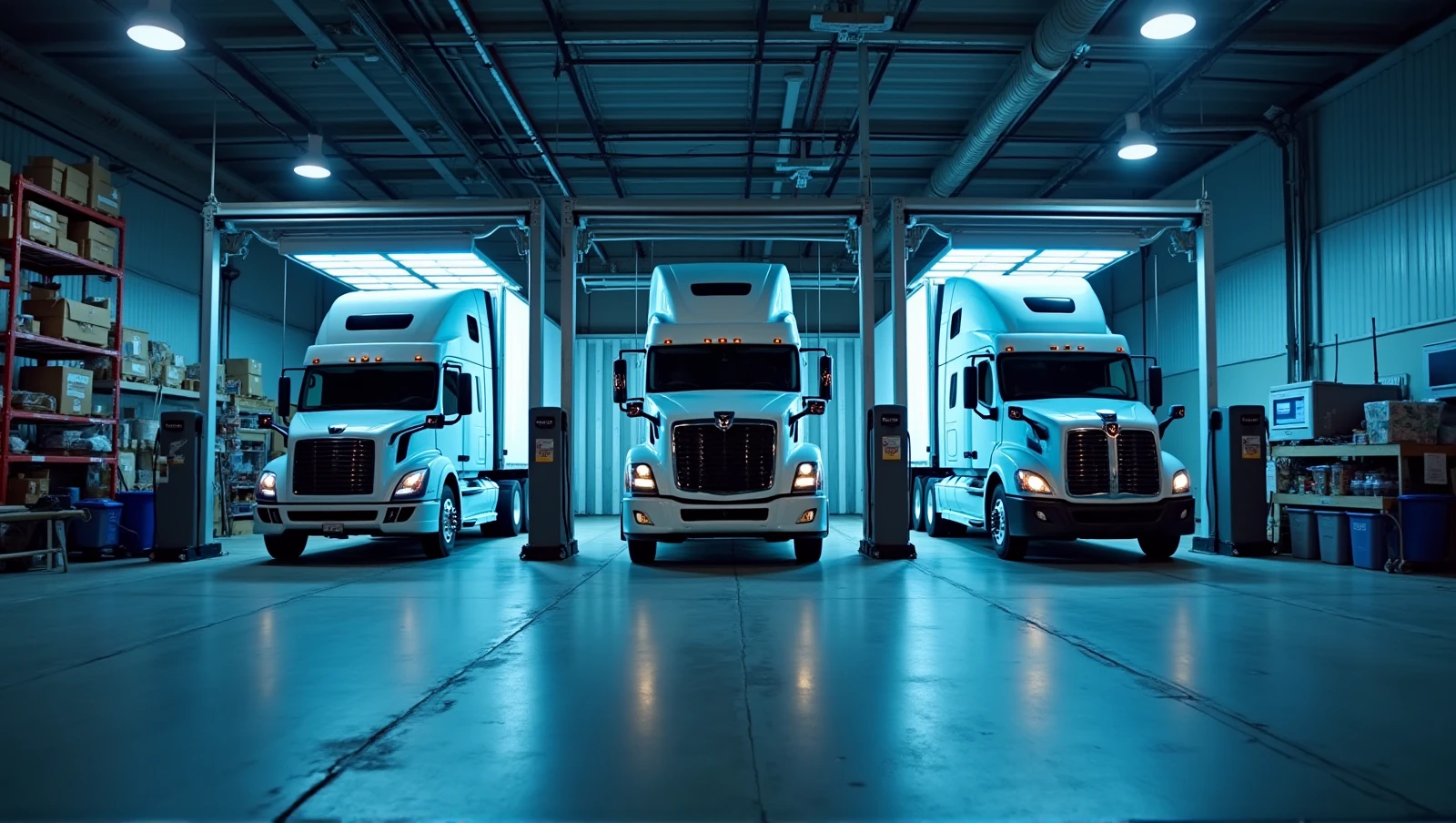
The critical detail for operations is the shift in energy sources. The increasing adoption of zero-emission, energy, or fuel-efficient vehicles is driving demand. This is not optional; it is market-driven by rising fossil fuel prices and limited availability. Service providers are moving toward fuel-cell electric vehicles (FCEV) and battery electric vehicles (BEV).
Operational Impact
The transition to electrified energy-efficient trucks is the single biggest operational variable in the next decade. Logistics service providers are focusing on partnering with companies to supply increasing demand for these vehicles. Nearly all leading service providers are actively investing in early adoption and modifying fleets.
For maintenance supervisors, this changes the preventive maintenance schedules. Electric drivetrains reduce moving parts but introduce high-voltage safety protocols and battery health monitoring. The mean time between failures (MTBF) profiles will shift. While the source does not provide specific maintenance cost reductions, it notes that rising fossil fuel prices create demand for electric trucks. This suggests a total cost of ownership (TCO) calculation where fuel volatility is hedged against electrification infrastructure costs.
Partnerships are becoming essential to manage this transition. In July 2023, 15 leading freight service providers partnered under the Government of India's Zero Emission Vehicle Emerging Markets Initiative (ZEV-EMI) and Electric Freight Accelerator for Sustainable Transportation (E-FAST). This initiated the electrification of Indian freight trucks. While this is international, it signals the collaborative model required to manage infrastructure gaps.
What to Watch
Regulatory bodies are not waiting for the market to self-correct. Stricter emission standards are driving the move to clean energy vehicles. National governing institutions are investing in electrification considering environmental benefits.
In August 2023, Mayor Bruce Harrell and the City of Seattle's Office of Sustainability and Environment (OSE) announced a plan for local truck drivers. While specific mandates vary by municipality, the trend is clear: local governance is accelerating federal timelines. Fleet managers must monitor OSE-style initiatives in their operating regions. Non-compliance risks fines, but late adoption risks asset stranding—owning diesel units that cannot operate in urban zones where your retail and pharmaceutical clients are located.
Bottom Line
The data is clear: the market is growing, but the fuel is changing. With North America holding over a third of the global market share, US fleet managers are on the front line of this transition.
1. Audit Your Routes: Identify zones where emission standards are tightening (like Seattle) and prioritize electrification for those assets.
2. Secure Partnerships: Do not attempt electrification in isolation. Look for partnerships similar to the E-FAST initiative to share infrastructure burden.
3. Forecast Capacity: Plan for the 3.82% market growth. If you aren't expanding capacity or efficiency, you are losing market share to competitors who are.
The shift to zero-emission vehicles is driven by cost and compliance. Waiting for perfect technology is a losing strategy. Start the transition now to manage the TCO impact before regulatory deadlines force your hand.