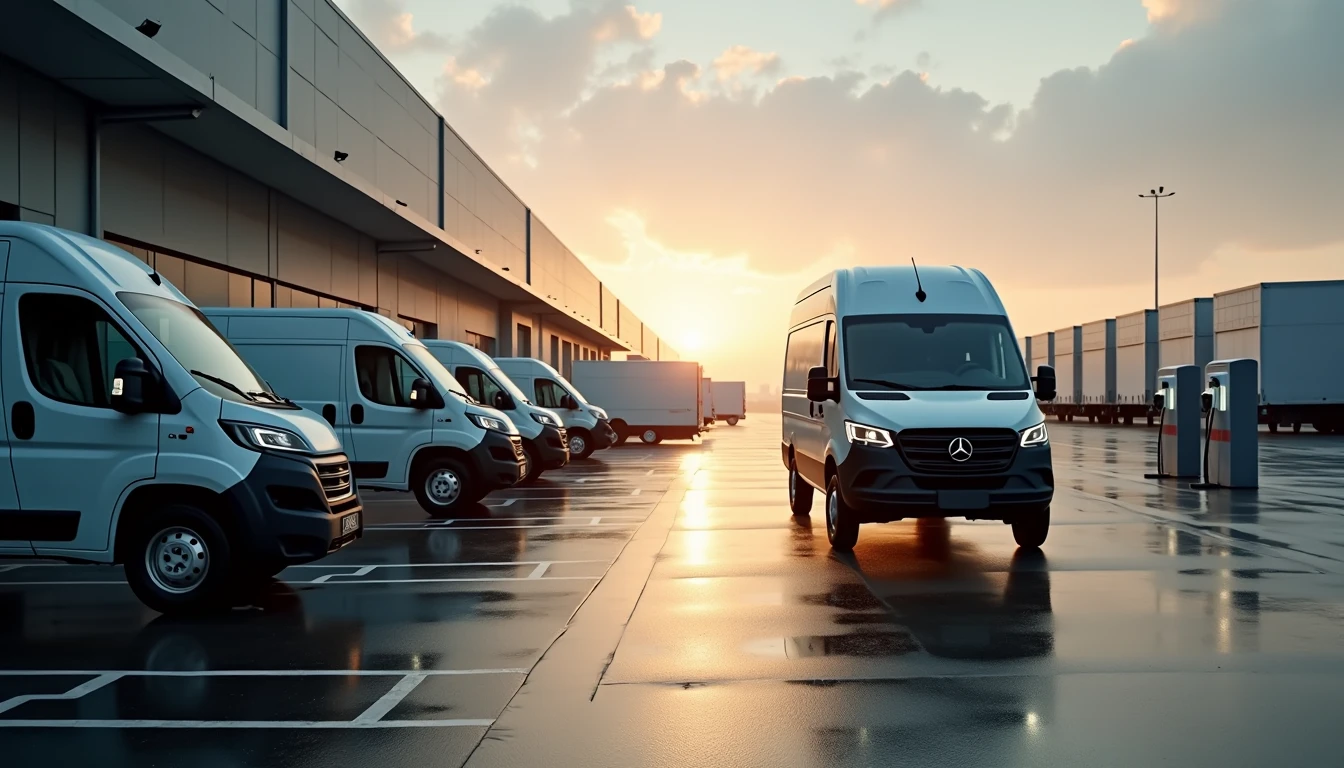
Electric Delivery Vans in 2026: Range, Route Fit, and the Real Cost-Per-Mile Stakes
The Big Picture
If you’re planning delivery operations for 2026, the business case is shifting from “Should we pilot EVs?” to “Which routes justify an EV first?” The market is no longer limited to early-adopter hardware. By 2026, the list of electric delivery van options is broad enough that fleets can match a platform to actual duty cycles instead of forcing routes to fit the vehicle.
Large operators have already validated scale. Amazon, FedEx, and DHL are running tens of thousands of electric vans and step vans, and Amazon has deployed well over 20,000 Rivian electric delivery vans in the U.S. What’s changed heading into 2026 is availability: more of this equipment is trickling down to regional carriers, contractors, and even single-van businesses through both new and used inventory.
From an operations standpoint, the two levers that matter are (1) operating cost per mile and (2) uptime. Operators commonly report 30–50% lower energy and routine maintenance costs versus gas vans on local routes, and battery-electric vans deliver zero tailpipe emissions, which matters as urban zero-emission zones expand (Europe is explicitly accelerating the shift from diesel to battery power in light commercial vehicles).
Fleet Impact
- ROI driver: Reported 30–50% lower energy and routine maintenance vs. gas vans on local routes
- Uptime driver: Simpler routine maintenance profile (per operator reports referenced in source)
- Compliance implication: Zero tailpipe emissions supports operations in emerging urban zero-emission zones
Key Details
Why 2026 is a pivot year
The source frames 2026 as the point where electric delivery vans move from pilot to mainstream. Three data points support that:
- Rivian held about 66% (two-thirds) of the U.S. electric cargo-van market by 2024, demonstrating large-scale viability.
- Most new electric delivery vans target 150+ miles of mixed-duty range on a full charge (the source cites a typical 150–200 mile target).
- Fleets report 30–50% fuel and service savings on local routes compared with gas vans.
Stop buying by badge; buy by duty cycle
The practical selection method in the source is simple: define the “hard day” on the route first—miles, stops, climate, idle time—then map vehicles to that. This is the only reliable way to avoid over-buying range you don’t use (and paying for it) or under-buying and missing routes.
2026 van matches by use case (per source)
The source provides high-level pairings to align route types with vehicle categories:
- Urban parcel and DSP routes: Rivian EDV, Ford E-Transit, Mercedes-Benz eSprinter
- Typical duty: 80–150 miles/day, dense stop patterns
- Operational note: These routes benefit from regenerative braking and overnight depot charging.
- Large step-van routes: Workhorse W56 and similar electric step vans
- Typical duty: 100–150 miles/day with heavy payloads
- Fit: Walk-in bodies aligned to FedEx/UPS-style delivery.
- Tight urban and micro-fulfillment: Compact vans and upcoming city EVs (ID. Buzz Cargo-class, FlexEVan-type platforms)
- Fit: Short routes where maneuverability matters more than cubic volume.
Core electric cargo van platforms cited for 2026 (U.S.-focused)
The source describes a familiar starting point for many fleets: a cargo van on a unibody chassis, similar in format to gas vans, which reduces friction in driver training, upfitting, and depot operations.
It lists these mainstream cargo-van options and positioning (with the explicit caution to confirm final specs with OEMs/dealers):
- Ford E-Transit (2025–2026)
- Size class: Full-size cargo van
- Estimated usable range: ~148–159 miles for common configurations
- Noted strengths: Dealer network, familiar Transit ergonomics, multiple roof heights
- Best suited for: Regional parcel, service trades, mixed urban/suburban
- Mercedes-Benz eSprinter (2nd-gen)
- Size class: Full-size cargo van
- Range: Up to ~250 miles WLTP on largest battery (source notes lower in U.S. EPA terms)
- Noted strengths: Efficient drivetrain, strong upfitting ecosystem
- Best suited for: Longer regional routes, highway-heavy duty cycles
- Rivian EDV
- Format: Tall, walk-in style cargo van
- Typical route range: roughly 120–150+ miles (varies by configuration)
- Market validation: Amazon deployment well over 20,000 units; Rivian held ~66% share of the U.S. electric cargo-van market by 2024
Fleet Impact
- Spec risk control: Match vans to 80–150 mi/day or 100–150 mi/day duty cycles where indicated, rather than buying maximum range by default
- Procurement lever: Unibody cargo van formats reduce change-management cost (training, upfit, depot ops)
- Compliance implication: Prioritize zero tailpipe emissions platforms where zero-emission zones affect service territories
Operational Impact
Total cost of ownership: where the savings show up
The only quantified operating-cost claim in the source is meaningful: 30–50% lower energy and routine maintenance costs versus gas vans on local routes. For a fleet manager, that’s a straight-line TCO lever—especially on dense stop-and-go routes where EVs can perform efficiently and return to base for overnight charging.
The operational takeaway: target local and urban routes first, where the source suggests EVs can maximize regenerative braking benefits and keep charging simple (overnight depot charging).
Range planning: avoid buying the wrong problem
Most new electric delivery vans target 150–200 miles of mixed-duty range, and several recommended use cases in the source sit below that:
- Urban parcel/DSP: 80–150 miles/day
- Large step-van routes: 100–150 miles/day
That tells you the “first wave” routes are often not extreme-range routes—they’re predictable, repeatable, and depot-based. Over-buying range is a classic way to inflate acquisition cost without improving delivery outcomes. Under-buying range is worse: it creates missed routes, driver workarounds, and dispatch chaos.
Uptime and maintenance scheduling implications
The source does not provide service intervals or mean time between failures figures, so don’t assume them. What it does indicate is that operators are seeing lower routine maintenance costs versus gas vans on local routes. From a preventive maintenance scheduling standpoint, the practical move is to plan EV deployments where you can control variables: consistent daily mileage, consistent dwell time at the depot, and stable payload profiles.
What to Watch
Zero-emission zone pressure and compliance planning
The source explicitly calls out Europe’s zero-emission zones as a driver accelerating the shift from diesel to battery power in light commercial vehicles. Even if you’re operating in the U.S., the compliance lesson is to map your service territory against current and emerging emissions rules so you’re not forced into last-minute vehicle changes that hurt uptime and budget control.
Market maturity: broader choice, more used supply
The 2026 shift is also about availability and fit: EV vans are reaching regional carriers and smaller operators via new and used vehicles. That changes procurement strategy—more options mean you can standardize platforms by route type instead of forcing a one-vehicle-fits-all approach.
Fleet Impact
- Compliance implication: Zero tailpipe emissions can future-proof routes entering emerging zero-emission zones
- Budget implication: Broader market (including used) improves sourcing flexibility and reduces single-OEM dependency risk (without assuming pricing)
Bottom Line
For 2026 planning, treat electric delivery vans as a route-optimization decision, not a branding decision. Start with duty cycles—miles, stops, climate, idle time—and target the routes the source flags as EV-friendly: 80–150 miles/day urban parcel work and 100–150 miles/day step-van style routes that return to base.
Then shortlist platforms using the specs the source provides: Ford E-Transit at ~148–159 miles usable range for common configurations, Mercedes-Benz eSprinter with up to ~250 miles WLTP on the largest battery (noting the source’s caution that U.S. EPA terms will be lower), and Rivian EDV validated by well over 20,000 units deployed at Amazon and ~66% market share by 2024.
Fleet Impact
- Action: Build a 2026 EV procurement plan around duty-cycle bands (80–150, 100–150, and 150–200 mile mixed-duty targets)
- ROI expectation (per source): 30–50% lower energy and routine maintenance costs on local routes
- Compliance: Zero tailpipe emissions supports operations as zero-emission zones expand