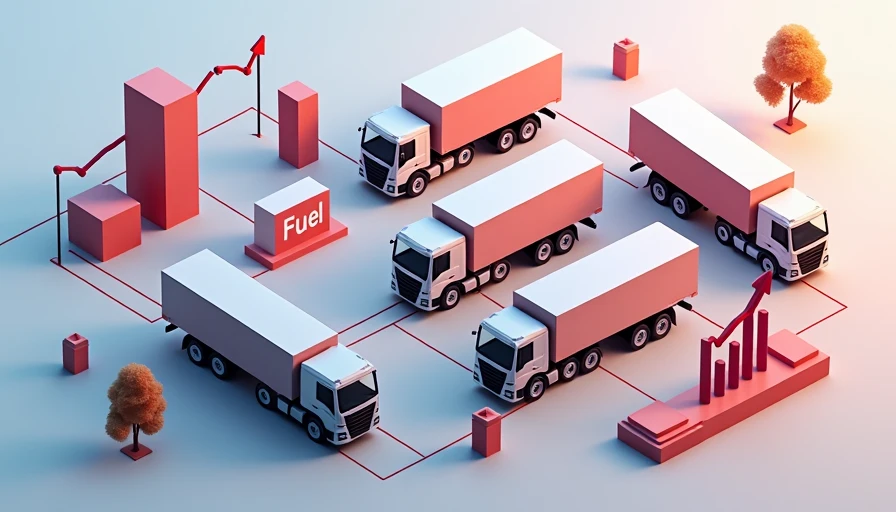
Fuel is the second-largest operating cost for most fleets, right behind labor. If you're managing 400+ vehicles like I do, a 5% improvement in fuel economy translates to real money—hundreds of thousands of dollars annually. But fleet fuel optimization strategies aren't just about chasing pennies at the pump. They touch driver behavior, route planning, vehicle spec, maintenance intervals, and procurement contracts. Over 20 years, I've tested most of them. Here's what actually moves the needle—and what your CFO will want to see in ROI.
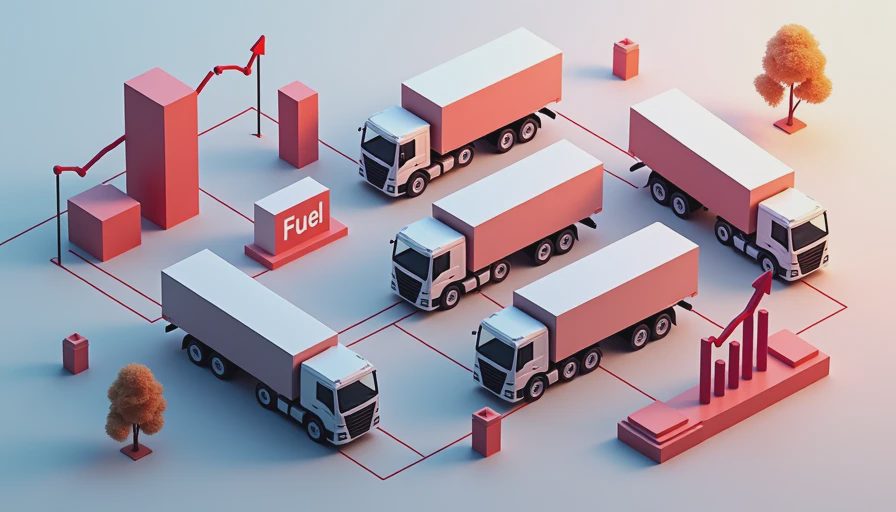
Telematics and Route Optimization: Your First 10% Savings
The lowest-hanging fruit in any fleet fuel optimization strategy is route efficiency. If your drivers are sitting in traffic or taking longer routes because dispatch is working off paper maps, you're burning cash. Modern telematics platforms—think Samsara, Geotab, or Verizon Connect—give you real-time traffic rerouting, geofencing, and historical route analysis. In our fleet, we cut 8% off fuel spend in the first six months just by optimizing daily delivery routes and eliminating unnecessary left turns (yes, UPS was right).
**Fleet Impact:** Expect a 6–12 month payback on telematics hardware and software fees from fuel savings alone. Don't forget the compliance bonus: ELD integration means you're also covering your HOS bases.
Driver Behavior and Idle Reduction: The Human Factor
Even the best routes get wasted if a driver idles for 30 minutes during a lunch break or accelerates hard at every green light. Fleet fuel optimization strategies must address driving habits. We use driver scorecards tied to incentives—not punishment. Our top 10% performers achieve 7.5 mpg in a typical day cab, while aggressive drivers barely hit 6.2. Multiply that over 400 trucks and 100,000 miles each per year, and the gap is over 100,000 gallons of diesel.
Idling is the biggest offender. An hour of idle time burns roughly 1 gallon of diesel. If each of your trucks idles two hours a day, that's 2 gallons × 300 days = 600 gallons per truck per year. At $4/gal, that's $2,400 per truck. With 100 trucks, you're burning $240,000—just while parked.

**Fleet Impact:** Driver training programs that focus on progressive shifting, coasting, and idle reduction can deliver 3–5% fuel savings within 90 days. Combine with automatic engine shutdown timers (set to 3–5 minutes) and you'll see results. Our idle time dropped 40% after installing APU units and setting company-wide idle limits.
Vehicle Spec'ing: Spec It Right, Save from Day One
Fleet fuel optimization strategies start before the truck hits the road. When spec'ing new vehicles, aerodynamic packages, low-rolling-resistance tires, and automated manual transmissions (AMTs) can improve mpg by 10–15% compared to base configurations. I always spec for the duty cycle: a P&D truck doesn't need the same drivetrain as an OTR sleeper. For our sprinter vans, we moved from gasoline to diesel and saw a 22% fuel economy gain, which paid back the premium in 18 months.
**Fleet Impact:** Payback on aero kits is typically 12–24 months from fuel savings. AMTs add about $2,500–$4,000 to the sticker price but yield 4–6% better fuel economy—plus reduced driver fatigue and lower transmission wear.
Maintenance: The Silent Fuel Economy Killer
You can't optimize fuel if your trucks are mechanically compromised. Underinflated tires increase rolling resistance. Clogged air filters reduce combustion efficiency. Loose belts, failing injectors, and old fuel filters all chip away at mpg. A well-maintained truck can be 5–8% more fuel-efficient than one running on deferred maintenance.
We moved to a predictive maintenance model using telematics data. Oil change intervals are now condition-based, not calendar-based. Tire pressure monitoring alerts us the moment a tire drops below spec—no more waiting for PM inspections. That alone saved us about 2% on fuel last year.
**Fleet Impact:** A tire pressure monitoring system costs roughly $200–$400 per trailer but can pay back in six months through reduced tire wear and fuel savings. For the whole fleet, maintenance-based fuel improvement compounds with other strategies.
Fuel Procurement: Buying Smarter, Not Just Driving Smarter
Part of any good fleet fuel optimization strategy is how you buy the fuel. Fuel cards with negotiated discounts, bulk purchasing, and on-site tanks can reduce per-gallon cost by 10–20 cents. That adds up fast. We use a fuel card that gives us a 15-cent discount at certain truck stops, and we pay with a high-yield business checking account that offers cash back on fuel purchases—another 2% effectively.
We also route drivers to preferred fuel stops using telematics. No more getting fuel at the expensive independent station off the exit. Our fuel procurement strategy alone saved us $85,000 last year.
**Fleet Impact:** If you're not negotiating fuel discounts annually, you're leaving money on the table. Volume matters—even a 30-truck fleet can get a 5-cent discount. For 400 trucks, we pushed it to 18 cents.
Putting It All Together: A Realistic Fuel Reduction Target
When I present our fleet fuel optimization strategies to the CFO, I don't promise 20% overnight. That's fantasy. But a combined approach—telematics, driver coaching, vehicle spec, maintenance, and smart buying—can realistically cut fuel spend by 12–18% over 24 months. Our fleet dropped from $1.2 million in annual fuel cost to $990,000—a 17.5% reduction—by layering these tactics over two years.
Start with the quick wins: telematics and idle reduction. Then attack driver behavior. Spec new trucks smarter. Tune up the maintenance program. Finally, renegotiate fuel contracts. Each piece compounds.
**Fleet Impact:** Every $0.01 saved per gallon across a 400-truck fleet burning 2 million gallons per year yields $20,000 in annual savings. Work the multiplier.
Fleet fuel optimization strategies aren't a one-and-done project. They require constant monitoring, data review, and driver engagement. But the payoff is real—lower costs per mile, better compliance, and a fleet that runs leaner. And that's something both you and your DOT inspector can appreciate.
*What it costs, what it pays back, what it triggers with DOT.*