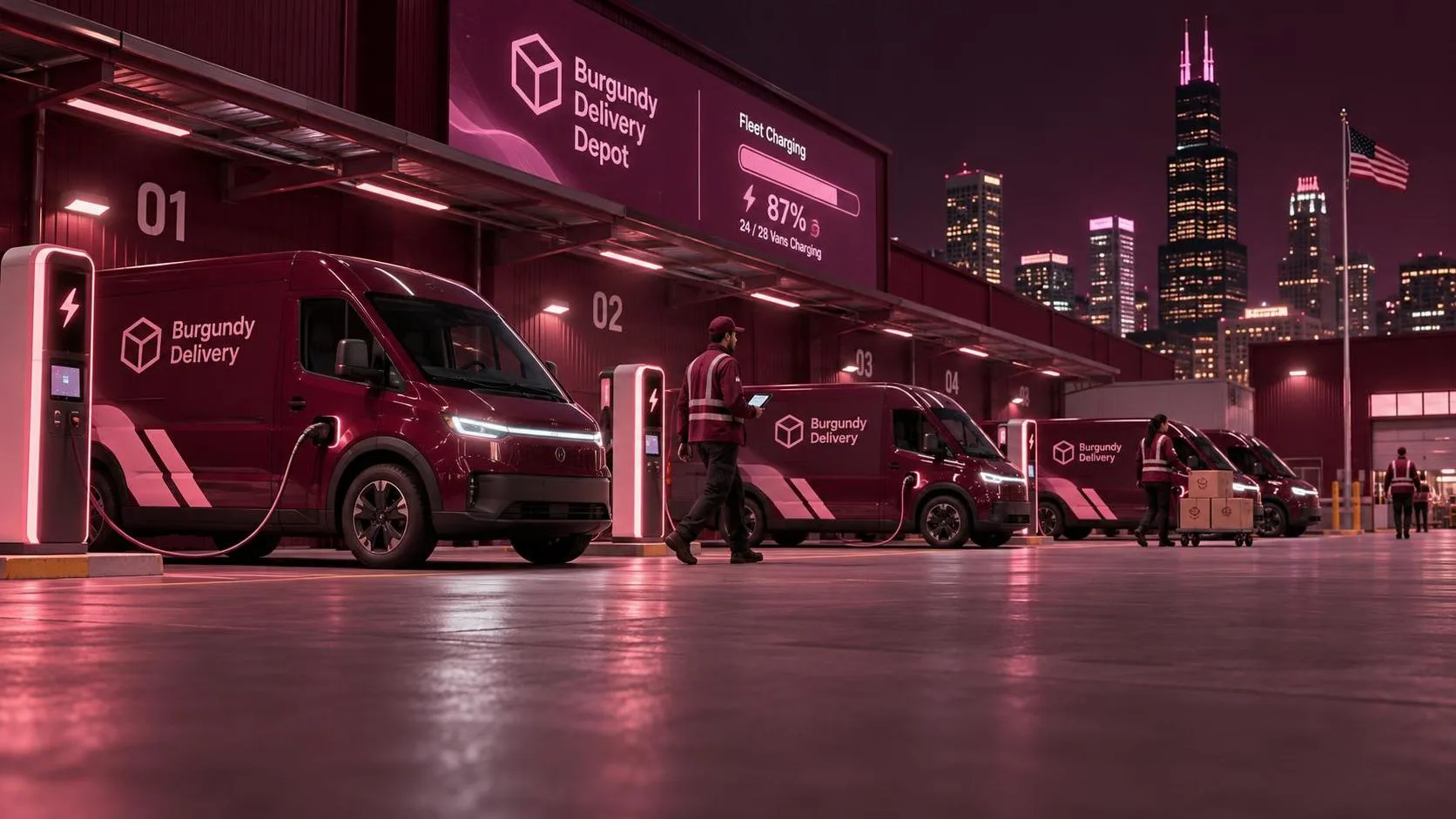
Electric vans can cut route energy and maintenance costs, but a low electricity rate alone does not make the business case. The decision turns on loaded route range, charging capacity, vehicle availability, and the extra capital tied up in both vans and infrastructure. Start with routes that return to a predictable depot, then calculate cost per mile using your own utility bill and duty cycle. What it costs, what it pays back, what it triggers with DOT: those are the questions to answer before ordering.
Start with the route, not the vehicle
Pull a full year of route data if you have it: daily mileage, stops, payload, dwell time, and the longest shift. Include seasonal peaks and the routes drivers cover when someone is absent. A van that handles the average day but needs an unplanned charging stop on your busiest day may cost more in labor than it saves in energy.
Ford E-Transit and Mercedes-Benz eSprinter are examples of commercial electric vans to put on a specification list. Their configurations, availability, and service arrangements can change, so get written quotes and confirm the actual cargo dimensions, payload, and charging capabilities for the vehicle you can order. Compare them against your existing van on the same route; a nameplate alone does not establish which one has the lower operating cost.
Give the route a range cushion rather than planning around a manufacturer’s best-case figure. HVAC use, highway speed, terrain, weather, payload, and battery condition can all affect consumption. Ask the supplier for representative efficiency data, then verify it during a pilot that includes demanding days. Build the fallback plan before the pilot starts: who supplies a replacement vehicle, how quickly, and at whose expense?
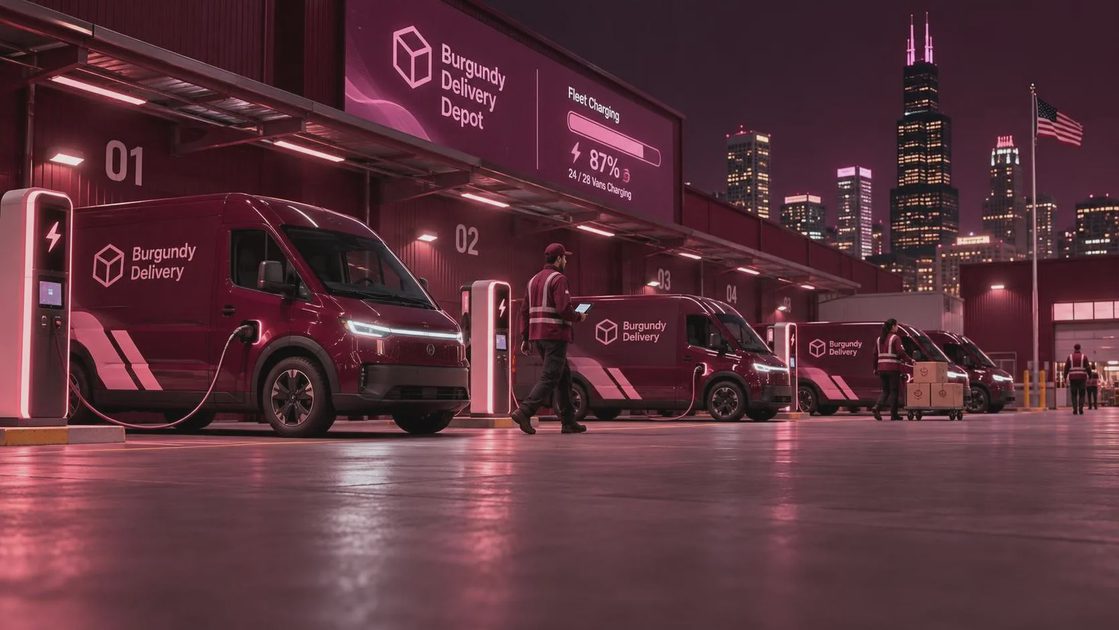
Calculate cost per mile from the wall
For electric vans, use electricity drawn from the charger or meter, not just energy reported by the vehicle. Charging losses mean those figures can differ. Divide total charging electricity cost by miles driven over the same period. Include the energy portion of the utility bill and allocate demand charges and other relevant fees consistently.
Here is an illustrative calculation, not a fleet benchmark. At 0.5 kWh per mile measured from the wall and an all-in allocated electricity cost of $0.16 per kWh, energy costs $0.08 per mile. A gasoline van using one gallon per 12 miles at $3.60 per gallon costs $0.30 per mile for fuel. The difference is $0.22 per mile before maintenance, vehicle financing, infrastructure, insurance, and other costs.
Fleet Impact: At 20,000 miles per year, that illustrative energy difference is $4,400 per van annually. If the electric vehicle and its allocated charging infrastructure cost $22,000 more upfront, simple payback on energy savings alone is five years. This ignores financing, taxes, incentives, maintenance differences, residual value, and replacement costs; add those before presenting an investment case. Do not assume an incentive applies until eligibility and availability are confirmed.
Maintenance deserves its own line. Electric vans eliminate oil changes and some engine-related work, but tires, brakes, suspension, collision repairs, and inspections remain. Obtain labor rates, parts lead times, warranty terms, and a realistic substitute-vehicle cost from service providers. A van waiting for a specialized repair still has a route to cover.
Size the depot around the overnight window
Charging electric vans is an operations schedule, not simply a count of parking spaces. Estimate daily energy needed per vehicle from route miles and wall-measured consumption. Then divide that energy by the usable charging window to estimate average power required. For example, replacing 60 kWh in 10 hours requires an average of 6 kW delivered over that period; the actual equipment and electrical design need to account for losses and operating limits.
Multiply across vehicles, account for staggered arrivals, and ask whether charging can be managed to avoid simultaneous peaks. A fleet that returns at 6 p.m. and leaves at 5 a.m. has a different problem from one running two shifts. Leave room for a late return, a missed plug-in, and the vehicle that needs extra energy the next day.
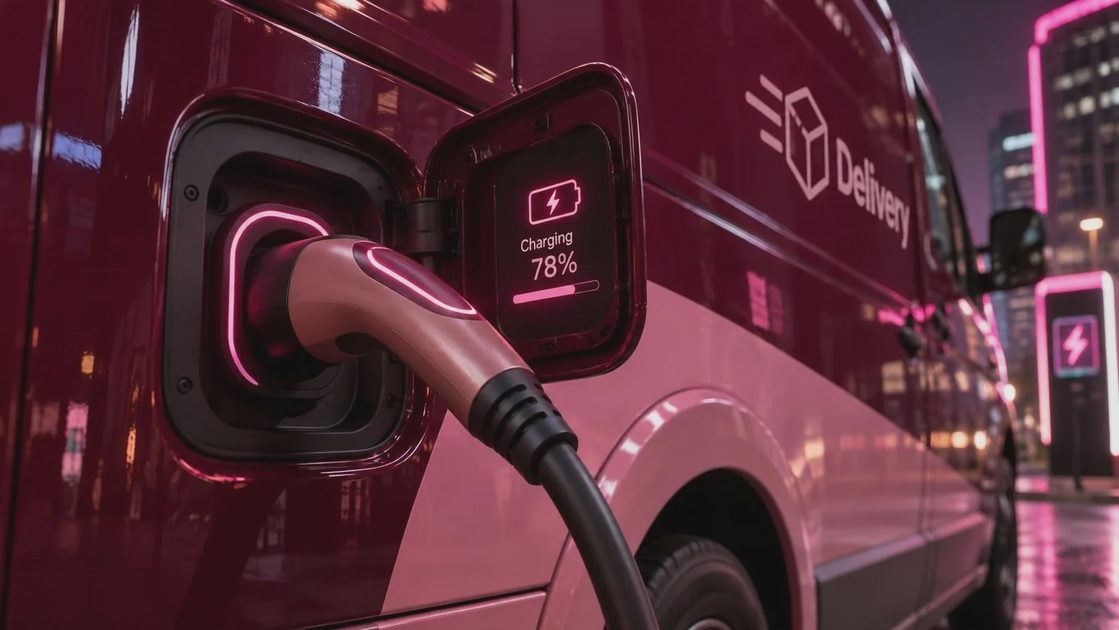
Bring the utility and a qualified electrical contractor in early. Request a site load assessment, interconnection requirements, a written construction scope, and a schedule for any service upgrade. Review the tariff for demand charges, time-of-use periods, and changes in rates. A charger’s rated output is not a guarantee that every van will receive that power simultaneously.
Plan for the unglamorous details: cable reach, snow or standing water where relevant, bollards, accessible maintenance space, network connectivity if the system requires it, and a procedure for a failed charger. Track missed charging sessions as downtime events, not just facilities tickets.
Check weight and DOT obligations before deployment
Battery weight can affect payload and the vehicle’s gross vehicle weight rating. Compare the manufacturer’s payload rating for the exact configuration with your loaded vehicle weight, including the driver, shelving, tools, and cargo. Weigh a representative loaded van and verify axle limits. Do not assume a familiar route remains legal simply because the cargo fits inside.
For interstate operations, FMCSA’s general commercial motor vehicle definition in 49 CFR 390.5 includes vehicles with a gross vehicle weight rating or gross combination weight rating, or actual gross vehicle or combination weight, of 10,001 pounds or more, among other criteria. Other triggers can apply, including certain passenger and hazardous-material operations. State and intrastate requirements may differ. Check the actual ratings, use, and jurisdiction rather than treating all electric vans as exempt.
CDL thresholds are a separate question; do not confuse them with the broader commercial vehicle definition. Review applicable inspection, driver qualification, hours-of-service, and recordkeeping requirements with your compliance team. Special weight provisions for certain alternative-fuel vehicles are not a blanket waiver of every federal or state rule.
Set a pilot that can answer the budget question
Run a small group of electric vans on representative routes alongside comparable vehicles. Record miles, wall energy, charging failures, maintenance downtime, substitute-vehicle days, and loaded weights. Assign someone to collect utility and repair invoices; telematics alone will not capture the full cost.
Fleet Impact: Before expanding, calculate annualized cost per mile and compare it with the incumbent fleet using the same accounting period and cost categories. Separately report missed routes and compliance findings. If the pilot saves energy but requires a spare vehicle every week, the finance and dispatch teams need to see both numbers before approving the next order.