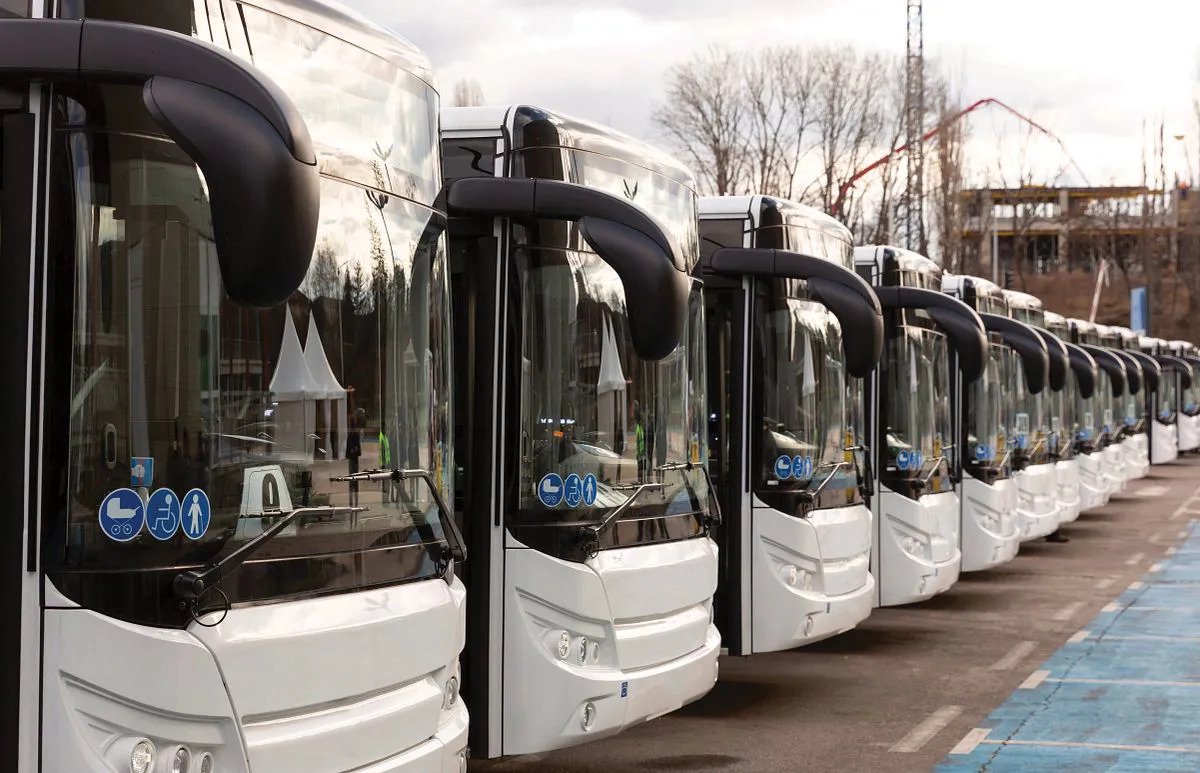
Tyres whispering across asphalt. No engine growl. Only a soft, steady hum. This is the soundtrack of commercial fleets undergoing their most profound transformation in more than a century. Electric vehicles (EVs), once considered a curiosity, are now emerging as a serious force across logistics, delivery, and public transportation.
Across Europe, governments are pushing aggressive emissions targets, low-emission zones are becoming more restrictive, and the cost of fuel keeps rising. For fleet managers and mechanics, this is no longer a distant possibility—it is happening now. Yet as new EVs replace diesel vans and trucks, a torrent of questions arrives with them. What actually changes under the bonnet—or more precisely, behind the battery pack? And what, despite all the excitement, remains fundamentally unchanged?
The Valvoline team will walk you through the evolving landscape of electric fleet maintenance in 2025. What must be relearned, and what knowledge from the diesel era still holds value? Let us cut through the noise and get into the practical details.
Among the first surprises awaiting mechanics making the switch to electric fleet maintenance is a simple but significant one: there is no oil change.
Conventional internal combustion engine (ICE) vehicles depend on engine oil to lubricate hundreds of moving parts. In EVs, that engine is absent entirely. But does that mean all fluids vanish along with it? Not exactly.
Electric drivetrains still call for maintenance fluids—only different ones. Transmission fluids for EVs, as one example, must manage both heat and friction within a high-voltage environment. In many instances, they are even more specialised than fluids used in conventional gearboxes. Valvoline Global has been formulating advanced fluids built specifically to meet the thermal and electrical demands of modern hybrid and EV fleets. These fluids must deliver excellent dielectric properties, resist oxidation, and remain stable across extreme temperature cycles.
Then comes the cooling system. Electric motors and inverters produce a substantial amount of heat. Many EVs rely on sophisticated liquid cooling systems that need regular inspection and servicing. Neglecting this could mean not just operational downtime but outright battery pack replacement—at a cost of tens of thousands of pounds.
Brake fluid also remains on the maintenance checklist. Although regenerative braking lessens wear on pads and discs, the hydraulic brake system still fulfils a critical safety function, particularly during emergency stops or low-speed manoeuvres.
So yes—fewer fluids, but by no means fluid-free.
A common misconception about EVs is that they demand almost no maintenance. Electric powertrains are mechanically simpler, that much is true, but day-to-day wear and tear still applies—particularly in commercial service.
Consider tyres. Electric vehicles are heavier than their combustion-engine counterparts, largely because of the weight of their battery packs. That extra mass puts greater strain on tyres, especially on front axles where motors are frequently mounted. Torque delivery in EVs is both instant and forceful, meaning tyre wear can be more aggressive—particularly if the fleet is not equipped with rubber designed for electric load and performance profiles. Routine alignment checks, pressure monitoring, and the use of EV-rated tyres are now fundamental elements of fleet maintenance.
Electric vans can weigh 200–400 kg more than their diesel equivalents due to battery packs. This additional mass affects tyre wear, suspension performance, and even loading limits. Many fleets are now revisiting their load management policies to maintain compliance with legal axle weights and reduce mechanical stress on components.
Next: brakes. Regenerative braking meaningfully extends brake pad life by using the electric motor to decelerate the vehicle while recovering energy. In fleet vehicles that stop frequently—urban delivery vans, for instance—the mechanical brake system still sees regular use. Uneven wear, moisture accumulation, and brake fluid degradation remain legitimate concerns. Mechanics must inspect for corrosion or stickiness in pads and callipers, especially in colder or wetter operating conditions.
Regenerative braking can reduce brake pad wear by up to 70%, yet it also creates a risk that pads corrode through lack of use—particularly in wetter climates. Regular inspection remains essential even when the wear rate slows down. It is among the most frequently overlooked issues in EV maintenance.
And naturally, windscreen wipers still deteriorate. Bulbs still fail. HVAC filters still become blocked. These are not cutting-edge challenges, but they are part of keeping any vehicle roadworthy. Whether a fleet runs on diesel or electricity, visibility, comfort, and basic safety systems demand the same level of attention they always have.
If the internal combustion engine was once the heart of a vehicle, the battery is now the soul of the EV. And like all things, it is not indestructible.
EV batteries are engineered for longevity, but they are not immune to degradation. Extreme temperatures, high charging speeds, and deep discharging cycles all take a toll on battery health over time. For commercial fleet operators, diminished battery performance does not merely translate to fewer miles per charge—it means lost time, disrupted schedules, and mounting operational headaches.
Fleet managers in 2025 are increasingly turning to battery health monitoring platforms. These tools, often cloud-connected, enable real-time tracking of charge cycles, thermal patterns, and voltage anomalies across an entire fleet. If, for instance, a van regularly charges at ultra-fast DC stations and its range begins declining ahead of schedule, predictive analytics can surface the issue early—allowing corrective action before it escalates.
Regular software updates are now part of the maintenance routine as well. Manufacturers periodically release firmware to optimise battery management systems (BMS), which can affect not only performance but long-term battery longevity.
Valvoline Global has been investing in battery diagnostics and thermal management solutions tailored specifically to the fleet sector, acknowledging that battery health is now central to maintaining operational uptime.
If you are not yet monitoring battery degradation trends across your electric fleet, you are missing a critical component of modern maintenance strategy.
The days when a spanner, a torch, and a degree of intuition were sufficient are behind us. In the electric fleet era, diagnostics begin with a laptop—and sometimes a secure login.
Electric vehicles are packed with sensors, embedded systems, and control units that keep watch over everything from wheel speed to battery temperature. When a fault arises, the first step is typically to connect to the vehicle's onboard diagnostics (OBD) system. Complexity continues to grow: many EVs require brand-specific diagnostic tools or proprietary software, and some fleet managers now engage independent specialists solely to handle this layer of maintenance.
The proliferation of over-the-air (OTA) updates adds further complexity. These updates can alter everything from motor calibration to the regenerative braking profile. A routine firmware push from a manufacturer could mean the difference between a problem resolved and a vehicle that will not start. Mechanics must know not only what has changed, but when—and why.
There is also a growing shift toward predictive maintenance driven by big data. Telematics systems can now identify vehicles likely to develop faults before any warning lights illuminate on the dashboard. For large fleets, this is transformative—enabling just-in-time servicing rather than scheduled downtime based on mileage or calendar intervals.
This is precisely where partnerships become vital. Valvoline's evolving maintenance solutions are beginning to integrate with digital fleet management platforms, helping operators bring fluid servicing, component health checks, and software updates into a single coordinated workflow.
In essence, today's mechanics are becoming part technician, part data analyst. For workshops, this evolution demands new skills, new tooling, and a fundamentally new way of thinking.
While electric fleets are expanding at pace, qualified EV technicians are not keeping up—at least, not yet.
In 2025, the skills gap stands as one of the fleet industry's most pressing concerns. Recent UK industry figures indicate that fewer than 15% of vehicle technicians are fully certified to work on high-voltage electric systems. The risks here are twofold: safety and competence. Without proper training, a routine battery service can quickly become a hazardous operation. These systems operate at voltages up to 800 volts—far exceeding the 12- or 48-volt systems typical of ICE vehicles.
Fleet workshops are increasingly compelled to invest in certification. Programmes provided by the IMI (Institute of the Motor Industry), alongside manufacturer-backed training courses, are seeing rising demand. The learning curve can be steep, but many technicians experience the transition as a natural progression—particularly as diagnostic tools take over much of the physical exertion that came with engine-intensive repairs.
Workshops that invest in EV-ready infrastructure—insulated tools, appropriate safety gear, and isolation bays—are already well positioned. Some are rethinking their hiring criteria as well. Apprentices with strong computer literacy and an instinct for systems diagnostics are proving every bit as valuable as candidates with traditional mechanical backgrounds.
This transition is not purely technical—it is cultural. The highest-performing fleet teams in 2025 are those who view EVs not as an inconvenience but as a chance to modernise their entire operation, from the garage floor to the cloud dashboard.
For all the attention electrification commands, some fundamentals remain stubbornly unchanged. A well-run fleet is still a disciplined one.
Preventive maintenance is every bit as vital for EVs as it was for diesel fleets. Missed inspections, worn tyres, underperforming brakes, or overdue fluid checks can still cause safety incidents and costly downtime. The cadence of sound fleet management—scheduled servicing, thorough record-keeping, driver feedback loops, and uptime tracking—has not changed in the slightest.
Driver behaviour also remains a major variable. Hard acceleration, abrupt braking, and inefficient route planning all shorten vehicle lifespan and reduce efficiency. With EVs, aggressive driving habits can also deplete range and place unnecessary stress on the battery. Many forward-looking fleet managers are now pairing their electric vehicles with driver coaching systems that deliver feedback on throttle use, regenerative braking, and charging behaviour.
Though the components have evolved, the core approach has not: monitor, maintain, and manage. Whether a vehicle runs on diesel or electrons, attention to detail remains the deciding factor.
EV batteries can shed up to 2% of capacity per year under typical operating conditions, but poor charging habits and temperature extremes can accelerate that decline considerably. Fleet operators who implement smart charging schedules and effective thermal management can extend battery life by several years—delivering savings of thousands in replacement costs.
Looking further ahead, one of the most compelling trends shaping the electric transition is the emergence of modular vehicle architecture. Unlike traditional ICE vehicles—which often require extensive disassembly to access a faulty component—some EV manufacturers are embracing modular systems where components such as the inverter, charging unit, or even the entire battery pack can be extracted and replaced in a manner closer to plug-and-play.
For commercial fleets, this represents a meaningful shift. Modular design enables faster turnaround times, reduced downtime, and in some scenarios, remote diagnosis paired with pre-ordered replacement parts. Fleet garages are evolving from repair facilities into rapid service centres, where the priority is not rebuilding an axle but swapping out a motor control module in under an hour.
Valvoline has been exploring how its service offerings can align with this modular approach. From advanced lubricants and coolants formulated for easy-swap components, to fluid monitoring tools embedded within fleet software platforms, the aim is to make EV servicing as efficient and intelligent as the vehicles it supports.
This shift also opens new doors for parts suppliers, service networks, and independent garages—provided they move quickly enough to adapt.
Electric vehicles may travel in near-silence, but their arrival has rattled the automotive world to its foundations. For fleet operators, this is not simply a change in drivetrain—it is a wholesale transformation of workflows, skill sets, and expectations.
The central challenge is finding the right balance between the new and the familiar. The EV revolution brings battery diagnostics, software updates, and high-voltage safety protocols to the forefront. But what ultimately matters is what has always mattered: reliability, safety, cost-efficiency, and uptime.
Valvoline's expanding product line reflects this balance—delivering state-of-the-art fluids for electric drivetrains while continuing to support fleets through training, service solutions, and the tools needed to navigate the complexity of this new landscape.
Electric fleet maintenance is not simpler. It is simply different. And for those prepared to adapt, the road ahead looks promising—even if it has never been this quiet.