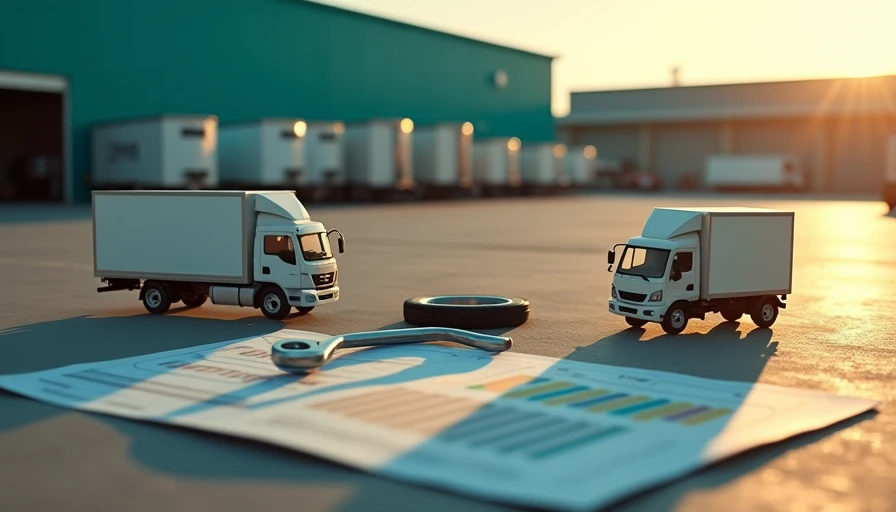
The commercial trailer leasing and maintenance market affects more than the monthly payment on a dry van or refrigerated unit. It determines how much capital stays available, how quickly equipment returns to service, and whether your inspection records stand up when a DOT investigator asks questions. For a fleet manager, the right comparison starts with cost per mile and uptime, not a glossy lease proposal.
I have managed mixed equipment long enough to know that a cheap trailer can become an expensive asset when parts are delayed, inspections are poorly documented, or a lease return exposes neglected wear. Before approving a contract, put the payment, maintenance responsibility, insurance requirements, and downtime exposure on one worksheet. That gives your CFO a useful decision and gives your operations team fewer surprises.
Why the commercial trailer leasing and maintenance market is changing
The commercial trailer leasing and maintenance market is being pushed by several practical pressures. Trailer prices remain substantial, interest rates affect ownership economics, and fleets are carrying more specialized equipment for temperature-controlled freight, construction materials, and last-mile distribution. A lease can preserve cash for tractors, drivers, technology, or facility upgrades, while a maintenance program can convert unpredictable repair bills into a more manageable operating budget.
The tradeoff is control. A full-service lease commonly bundles scheduled maintenance, inspections, roadside support, and administrative reporting. A finance lease or equipment loan usually gives the fleet more control but leaves repair planning and residual value risk in-house. Operating leases can be attractive when replacement timing matters, while ownership often wins for equipment that runs predictable routes for 10 years or longer.
Build the comparison around three numbers: monthly cost, expected cost per mile, and annual available days. If a trailer costs $1,350 per month but returns to service quickly after a brake or lighting repair, it may outperform a $1,050 payment that leaves your shop coordinating outside work and waiting for parts. The lower invoice is not automatically the lower fleet cost.
Lease structure and maintenance responsibility
Read the maintenance clauses as carefully as the payment schedule. Ask who pays for tires, wheel-end components, suspension parts, liftgates, refrigeration systems, telematics hardware, and damage caused by loading equipment. Some contracts include preventive service but exclude abuse, corrosion, accident damage, or repairs caused by unauthorized modifications. Those exclusions can turn a seemingly comprehensive plan into a narrow inspection package.
Set service standards in writing. A useful agreement identifies response times for roadside calls, parts availability targets, mobile repair coverage, after-hours contacts, and escalation procedures. For a refrigerated trailer, also define temperature-control response and data access. A warm load can create cargo claims, customer penalties, and lost capacity far faster than an ordinary tire repair.
Maintenance history should follow the asset. Require digital records showing inspection dates, work orders, parts installed, technician signoff, and open defects. Under FMCSA rules, commercial motor carriers must systematically inspect, repair, and maintain vehicles under 49 CFR Part 396. Drivers must complete required vehicle inspection reports where applicable, and the carrier remains responsible for safe operating condition even when maintenance is outsourced.
Fleet Impact: Outsourcing repairs does not outsource compliance. Assign one internal owner for inspection records, defect closure, and lease-provider performance. What it costs, what it pays back, what it triggers with DOT should be visible in the same dashboard.
Comparing total cost instead of monthly payment
The commercial trailer leasing and maintenance market rewards buyers who model the complete operating picture. Start with the base payment, then add mileage charges, excess-wear provisions, preventive maintenance fees, registration, taxes, insurance, telematics, roadside service, and expected downtime. For owned equipment, include financing interest, depreciation, tires, labor, parts, inspections, storage, and eventual resale value.
A simple example shows why the math matters. Suppose a 53-foot dry van lease costs $1,250 per month for 60 months. The base commitment is $75,000 before fees and end-of-term charges. Add $4,000 in expected tires and repairs, $2,400 in administration and inspection expense, and 10 lost operating days valued at $350 per day. The practical five-year cost is already near $84,900, before insurance and cargo-related exposure.
Now compare a $92,000 purchase financed over the same period. Ownership may require more cash or debt capacity, but a strong maintenance program and a reasonable resale value can narrow the difference. The answer changes again if the owned trailer sits unused during seasonal demand. Utilization is the hinge: a trailer earning revenue 300 days per year has a different economics profile from one used only during holiday surges.
Insurance, liability, and risk transfer
A lease contract does not eliminate insurance responsibility. The agreement may require physical damage coverage on the trailer, liability coverage for operations, cargo coverage, and proof that the lessor is listed as an additional insured or loss payee. Those terms should go to your insurance broker before signature, not after the first unit is delivered.
Physical damage coverage addresses covered loss to the equipment, subject to the policy deductible. Liability coverage addresses claims for bodily injury or property damage arising from covered operations. Cargo coverage deals with covered freight loss or damage, but its limits and exclusions are separate from trailer protection. Refrigerated freight, high-value goods, and unattended equipment deserve specific review.
The commercial trailer leasing and maintenance market also makes risk allocation important after an accident. Determine whether the lease provider handles salvage, subrogation cooperation, replacement equipment, and downtime documentation. A $2,500 deductible is easy to budget; an unplanned 45-day replacement gap during peak shipping season is not. Keep certificates, lease schedules, inspection records, and accident files organized so a claim does not become an operations investigation.

How to evaluate providers and service networks
The commercial trailer leasing and maintenance market includes national lessors, regional dealers, OEM-affiliated programs, and independent fleet service companies. Brand recognition is not enough. Measure the network where your trailers actually travel. A provider with a strong Dallas shop may be weak along a recurring route through western Kansas or southern Arizona.
Request maintenance performance data, not promises. Useful measures include average repair cycle time, first-time fix rate, roadside response time, preventive-service completion rate, parts fill rate, and repeat defects within 30 days. Ask for sample invoices and a redacted work order. Those documents reveal whether labor, environmental fees, mobile charges, and parts markups are being applied consistently.
Run a 90-day pilot with a defined group of trailers before converting an entire fleet. Compare downtime hours, repair cost per mile, inspection completion, and dispatch interruptions against your current baseline. Include a termination or service-credit mechanism when agreed response targets are missed. A pilot protects the operation while generating evidence your finance team can trust.
A practical buying checklist for fleet leaders
Before signing, complete these steps:
- Classify each trailer by mission, annual miles, utilization, and expected replacement date.
- Separate scheduled maintenance from wear items, abuse, accident damage, and cosmetic repairs.
- Confirm FMCSA inspection-record responsibilities under 49 CFR Part 396.
- Price insurance requirements, deductibles, cargo limits, and lessor certificate language.
- Model downtime using revenue per operating day, not only shop labor expense.
- Verify service coverage on every major lane and after-hours escalation process.
- Review end-of-term standards with photographs and written examples of acceptable wear.
- Set monthly reviews for cost per mile, open defects, availability, and vendor credits.
The commercial trailer leasing and maintenance market is not a simple lease-versus-buy decision. It is a capacity, compliance, and risk decision tied to how hard your equipment works. A well-written agreement can protect cash flow and uptime; a vague one can hide costs until the trailer is down or the contract ends. Put the numbers on one page, test the provider with a pilot, and make the final choice on reliable available days. That is what pays back in the real fleet.