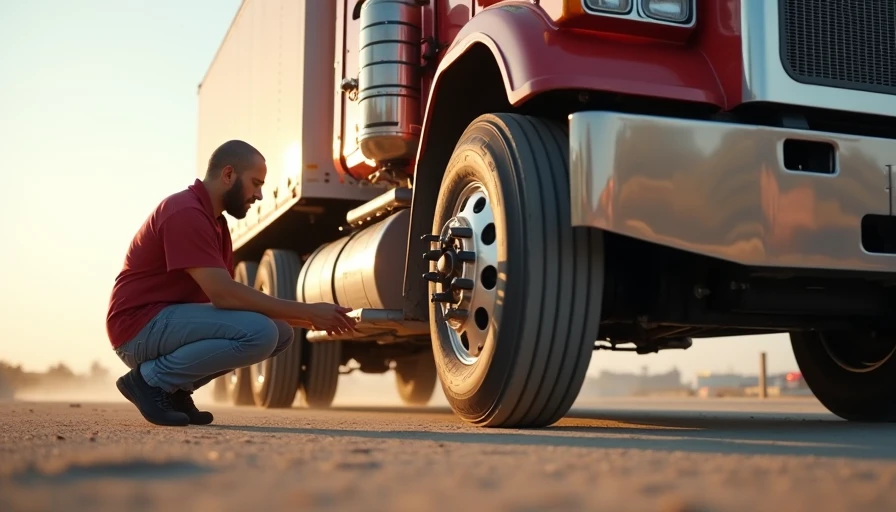
Ask me what causes the most preventable roadside breakdowns in a long-haul fleet, and I'll say it before I check the telematics: heavy duty tire pressure for long haul routes. In 20 years of running commercial fleets, I have watched underinflated tires cost more in downtime, casing repairs, and fuel than almost any other maintenance line item. The fix is not expensive, but it takes a system.
Start With the Manufacturer's Cold Inflation Number
Every truck tire has two numbers that matter: the maximum pressure molded into the sidewall and the cold inflation pressure for the load you are carrying. For Class 8 drive tires, that cold number usually lands between 80 and 100 psi. Steer tires often run 100 to 120 psi. The right setting depends on your axle weight, the tire's load index, and whether you are running duals or super singles.
Do not set pressure by habit. Set it by the load table. If your fleet runs a mix of day cabs and sleepers, build a pressure target sheet by tractor model, axle, and typical gross weight. Post it in the shop and keep a copy in the cab. From our fleet's data, the difference between targeting 95 psi instead of 100 psi across 400 tractors was measurable in fuel within a quarter.
Why Cold and Hot Readings Are Different
A tire heats up as it rolls. At highway speeds, a properly inflated truck tire can climb 15 to 30 degrees Fahrenheit, and pressure rises roughly 1 psi for every 10 degrees of internal temperature. If you check pressure after a truck has been running two hours, you are reading hot pressure, not the cold inflation pressure the load table asks for.
That matters more than most managers think. A tire that reads 105 psi hot may be at 95 psi cold, and the difference is enough to put it out of the operating band. Make it policy that inflation checks happen before the truck leaves the yard, not at the fuel island after the engine has been churning heat into the drive tires for the better part of a day.
What DOT Inspectors Actually Check
An FMCSA inspector is not obligated to pull out a gauge on every tire, but under 49 CFR 393.75, a tire must not be flat, leaking, or inflated beyond its rated maximum. A tire with visible sidewall bulging or signs of running underinflated can earn an out-of-service citation faster than almost any other equipment issue. I have seen a combination vehicle pulled off the road for a steer tire that showed a 10 psi discrepancy against the tag side.
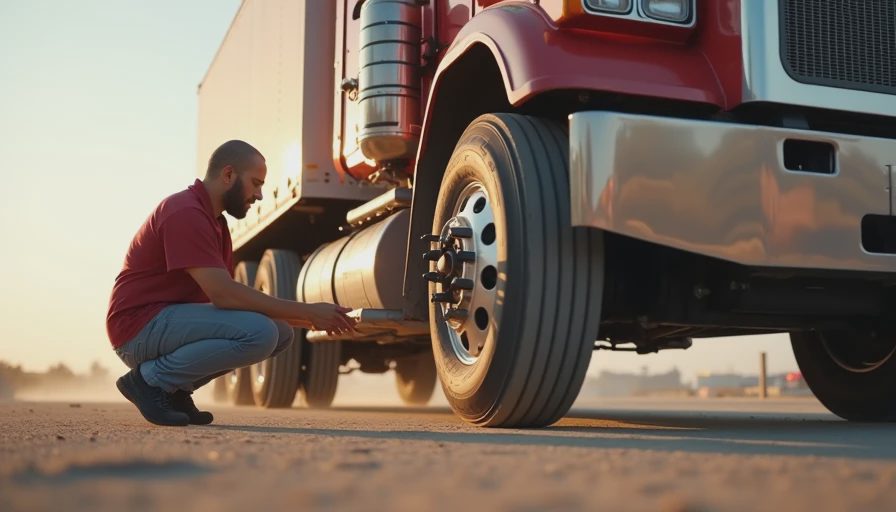
The daily pre-trip inspection is your first line of defense. The driver is legally required to check the tires as part of their DVIR. If your drivers are only kicking the tires, you are already missing the real data. Equip each tractor with a calibrated digital gauge or in-cab tire monitoring system. The FMCSA is becoming more aware of tire pressure anomaly patterns, and violations appear on your CSA BASIC score depending on the severity.
Temperature Swings, Load Weights, and Seasonal Targets
Ambient temperature changes shift your target. Every 10-degree drop in outside air temperature can reduce tire pressure by about 1 psi. For a fleet running Chicago-to-Dallas routes, that is the difference between 100 psi at the yard in Texas and 95 psi when the truck rolls out of an overnight stop in Illinois.
Load weight changes matter too. A fully loaded trailer with 34,000 pounds on the drive axles and a gross combination weight near 80,000 pounds needs more inflation than a truck deadheading back to the distribution center. You do not necessarily need automatic tire inflation systems, but you need a rule: adjust target pressure by axle weight and by forecast low temperature.

How to Build a Pressure Audit That Actually Works
Here is a checklist I have used across three fleets.
First, pick the same time of day for the audit, ideally before sunrise when the tires are cold. Second, use a single calibrated digital gauge, not the air hose dial from the shop. Third, check every position and record the reading in your CMMS or telematics platform. Fourth, flag any tire that is more than 5 psi below target, and do not simply add air without checking for leaks, valve stem damage, or a cracked wheel. Fifth, compare the reading to the previous check. A tire losing pressure slowly is always a tire problem waiting to become a roadside event.
And one more: retest after any tire service. If a tire gets mounted or rebalanced, the pressure target should be confirmed before the truck is dispatched. This sounds like basic maintenance, but the discipline is what separates a fleet that runs 90,000 miles on a steer casing from one that throws away a casing at 45,000 miles due to a heat-related separation.
The Cost Per Mile Your CFO Will Ask About
Air is nearly free. The cost of ignoring heavy duty tire pressure for long haul routes shows up in fuel, casing life, and unexpected roadside service. I have seen invoices for a single tire replacement exceed $400 for a steer tire, plus the cost of the tow and the unplanned downtime. When you multiply that across a fleet, the math gets uncomfortable.
From our fleet's data, standardizing a morning pressure audit reduced our tire-related roadside events by a significant margin. Fuel efficiency improved enough on our highway routes that the audit time paid for itself. The exact numbers vary by fleet, but the direction does not. Underinflated tires increase rolling resistance, which means more fuel burned per mile. A properly inflated tire runs cooler, which means fewer blowouts and more retreadable casings.
Make the pressure audit part of the maintenance schedule, not the driver's optional extra. If you need CFO-friendly numbers, track the audit compliance rate and the cost per mile for tire repairs before and after. Then sit back when the comparison goes up on the whiteboard.
The short version: heavy duty tire pressure for long haul is not a topic for the tire shop alone. It is a dispatch, maintenance, and safety issue all at once. Check cold, check every position, and track the trend.