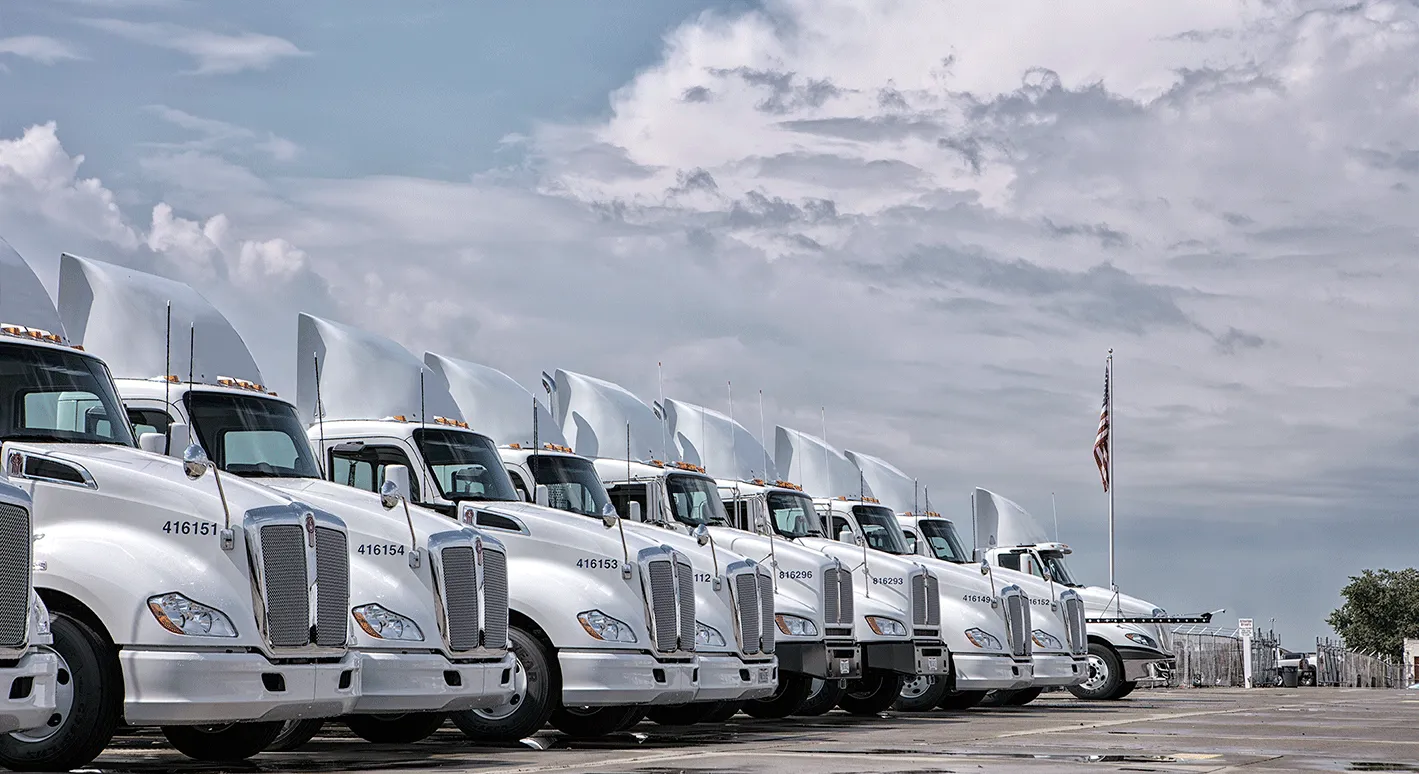
Regular fleet maintenance allows businesses and organizations to keep their vehicles performing at peak capacity. A solid maintenance approach enhances fleet operations, lowers costs, and prevents unexpected vehicle breakdowns. The value of fleet maintenance centers on preserving vehicle health and can spare operations thousands of euros annually by cutting maintenance expenses, reducing downtime, and elevating overall fleet performance.
Below are the critical steps that every business should incorporate when developing a sound fleet maintenance strategy.
Few indicators reveal the wear and tear on your fleet as clearly as odometer readings. Even when a visual inspection turns up nothing concerning, the kilometers logged on measuring devices may signal that a critical threshold is approaching. Accumulated kilometers place significant strain on all vehicles, making it essential to monitor them — whether digitally or by hand — and leverage that data to schedule routine maintenance.
Once a straightforward tracking program is in place, staying current with servicing all key systems and keeping your fleet running smoothly becomes far more manageable. If certain vehicles see little or no road time, do not assume they are immune from maintenance needs. Establish a dedicated checkup program for low-use vehicles, particularly before they are reintroduced to the driving schedule.
Whether maintenance is handled internally or through an outside mechanic, insisting on correct parts of the highest available quality is essential. The upfront cost may be somewhat higher, but the long-term savings are considerable. Quality engine oil, for example, is capable of drawing out top performance from your fleet while extending the service life of cars, trucks, and heavy-duty vehicles alike.
Premium products are also more precisely engineered for specific applications — such as special heavy-duty engine oil, extreme temperature coolant, and super tractor oil. Valvoline supplies all of the aforementioned universal and specialized oils, greases, and coolants, each formulated to deliver superior maintenance outcomes and lasting cost savings. Be sure to explore our full product selection.
Within fleet maintenance, drivers frequently serve as the most valuable contributors to the maintenance process. Given their daily contact with the vehicles, they are well-positioned to catch minor issues before they escalate into serious problems. Many large companies maintain a daily checklist of all fleet maintenance activities:
This concise checklist ensures that all drivers operate vehicles in safe working condition. When something on the checklist falls short of expected performance, reporting and resolving the issue becomes quick and straightforward. Training drivers on these inspection steps is fast and simple, and can spare your company considerable time, money, and hassle. While most checklist items require no formal instruction, organizing a brief course for drivers can confirm that every inspection is carried out correctly and efficiently.
Smaller companies are often best served by sending their fleet vehicles to a specialized mechanic shop for servicing. As fleets grow, however, bringing on a dedicated fleet mechanic to manage all vehicles in-house may prove more practical and cost-effective. This decision can benefit your business in several meaningful ways:
While a dedicated in-house mechanic may appear to be a significant expense initially, the savings accumulated over time compared to relying on an offsite maintenance shop are substantial. Furthermore, any fleet stands to gain from participation in The Fluid Analysis Program, which delivers a comprehensive report on equipment condition and helps identify the most effective maintenance solutions.
Routine maintenance is indispensable, yet it does not guarantee that a fleet will remain in good condition indefinitely. Engines, drivetrains, and numerous other systems deteriorate and eventually fail over time, necessitating periodic renewal of your fleet. A plan to retire aging vehicles once maintenance costs begin climbing — and to replace them with newer models — is essential. With a well-structured fleet maintenance plan, these transitions should come as no surprise, and your company will be financially prepared.
Fleet maintenance is fundamental for any business seeking efficient operations, cost-effective transportation, and reliably performing heavy-duty vehicles. Fleet managers at every level can draw on these key steps to keep their vehicles in prime condition with minimal losses and maximum safety. Valvoline recommends the use of our premium engine oil, greases, coolants, and other fluids throughout the maintenance process, alongside consultation of user manuals for all fleet vehicles. Combining these steps and strategies will yield the best possible fleet maintenance outcomes and the highest level of customer satisfaction.