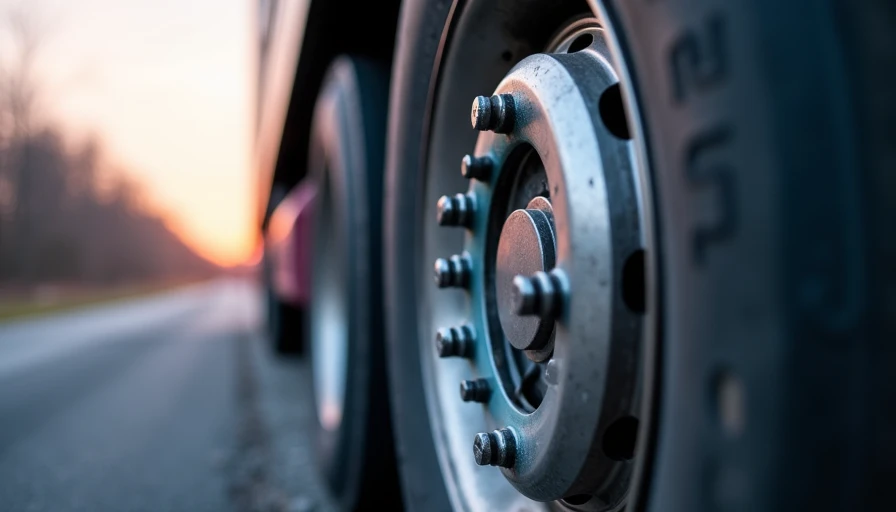
If you want to know **how to reduce trailer tire blowouts**, start with the numbers that matter: roadside service cost, lost delivery time, and avoidable tire spend. In fleet terms, one trailer tire failure can turn into a service call in the $300 to $900 range before you count late freight, damaged fenders, wiring repairs, or driver delay. On a busy operation, blowouts are not random bad luck. Most trace back to heat, underinflation, overload, impact damage, or aging casings that should have been pulled earlier.
I look at trailer tires the same way I look at any wear item in a fleet: what it costs, what it pays back, what it triggers with DOT. The good news is that preventing most blowouts does not require exotic hardware. It requires a pressure routine, realistic loading discipline, better inspections, and replacement timing that is based on condition instead of hope.
Control air pressure before the trailer rolls
Underinflation is still the fastest route to excess heat, shoulder wear, and casing failure. A trailer tire can look acceptable at a glance and still be dangerously low. That is why the first answer to **how to reduce trailer tire blowouts** is simple: cold-pressure checks must happen on a schedule, not when somebody remembers.
Build the routine around the tire maker's load-and-inflation table and your actual axle weights. Set pressure when tires are cold, use calibrated gauges, and train technicians to note recurring losses instead of just topping off and moving on. A tire losing 10 to 15 psi repeatedly usually has a valve, bead, puncture, or wheel issue that will not fix itself.
For larger operations, a tire pressure monitoring system or automatic tire inflation system can pay back quickly on high-mileage trailers. These tools do not replace inspections, but they do cut the number of low-pressure events that become roadside calls.
**Fleet Impact:** Pressure checks cost labor minutes. Blowouts cost service invoices, missed appointments, and sometimes wheel-end damage. The payback on a disciplined inflation program is usually measured in avoided breakdowns within one season.
Match the tire to the real load, not the brochure load
A lot of blowout problems start upstream in specification and loading. If the trailer regularly runs near gross axle limits, or if weight is uneven side to side, the tire is being asked to live in a higher heat environment than the purchase file suggests. That heat is what separates a tire that gives full service life from one that fails in July on the shoulder.
Use actual scale data when possible. If one axle group is consistently heavy, solve that through loading practice, trailer setup, or route planning. Also confirm the tire size and load range match the work. A trailer doing urban curb strikes, tight turns, and frequent scrubbing has a different duty cycle than a linehaul trailer cruising steady interstate miles.
This is also where wheel and suspension condition matter. Misalignment, worn bushings, bent components, and dragging brakes all build heat into the tire. If you are asking **how to reduce trailer tire blowouts**, do not isolate the tire from the rest of the trailer. Tires report every weakness in the running gear.
**Fleet Impact:** Three numbers your CFO will ask about — here they are first: tire cost per mile, roadside event rate, and hours of unplanned downtime. Better tire spec and load control improve all three.
Inspect for heat, damage, and irregular wear patterns
Pre-trip and post-trip inspections are basic, but basic does not mean optional. FMCSA inspection expectations are not vague about tire condition. Drivers and maintenance teams should be checking for cuts, exposed cord, bulges, sidewall cracking, embedded debris, valve damage, and tread wear that points to an alignment or inflation problem.
What matters most is catching the failure before it becomes a zipper rupture or tread separation at speed. In my experience, irregular wear is the early warning sign that gets ignored because the trailer is still rolling. Feathering, one-sided shoulder wear, cupping, or a tire that runs noticeably hotter than its mates all deserve a work order.
Temperature checks during yard returns can help. Even a simple infrared thermometer can identify one position that is running hotter than the others, which usually means inflation loss, brake drag, bearing issues, or overloading. From our fleet's data, the trailers with the best tire life are not the ones with the fanciest parts. They are the ones that get the fastest exception reporting.

Replace aged or compromised tires before they fail in service
Tread depth alone is a poor replacement strategy for trailer positions. Some tires age out, weather-crack, or develop internal damage long before the tread is gone. Sun exposure, long idle periods, chronic underinflation, impact events, and prior repairs all shorten the safe life of the casing.
If a trailer sits seasonally or cycles through low-mileage duty, put age tracking into your maintenance file. Follow the tire manufacturer's guidance for inspection and service life, and have questionable tires evaluated by a qualified technician. Do not keep marginal trailer tires in service because "they still have tread." That is one of the most expensive false economies in fleet maintenance.
Retreads can absolutely make sense in the right application, but casing quality and inspection discipline have to be there. A bad casing decision is cheaper only until the service truck invoice arrives. **How to reduce trailer tire blowouts** often comes down to removing suspect tires one month earlier instead of one week too late.
**Fleet Impact:** Early replacement feels expensive in the shop budget. Late replacement is more expensive in operations, especially when debris damage hits lights, air lines, mud flaps, or trailer body panels.
Train drivers and techs to prevent the failure chain
The final piece is accountability. Driver reporting, technician follow-through, and maintenance coding all need to connect. If a driver notes vibration after a pothole hit, that trailer should not disappear into the yard with no inspection. If a technician finds repeated low pressure on the same wheel position, there should be a root-cause note, not just another air fill.
Create a short blowout-prevention checklist: cold PSI verified, visible damage checked, tread condition noted, valve stems inspected, axle and suspension concerns flagged, and load exceptions reported. For fleets running high mileage, review tire failures monthly by position, age, brand family, route type, and cause category. Patterns show up quickly when you look.
If your operation is shopping vendors or service programs, ask for emergency road service coverage, casing inspection standards, and reporting detail. The best quote is not just the cheapest tire. It is the program that lowers total cost per mile and keeps freight moving.
The practical answer to **how to reduce trailer tire blowouts** is not one magic product. It is pressure control, correct loading, disciplined inspection, and timely replacement. Put that system in place, and you cut downtime, protect CSA exposure tied to poor equipment condition, and stop paying premium dollars for failures you could have prevented.