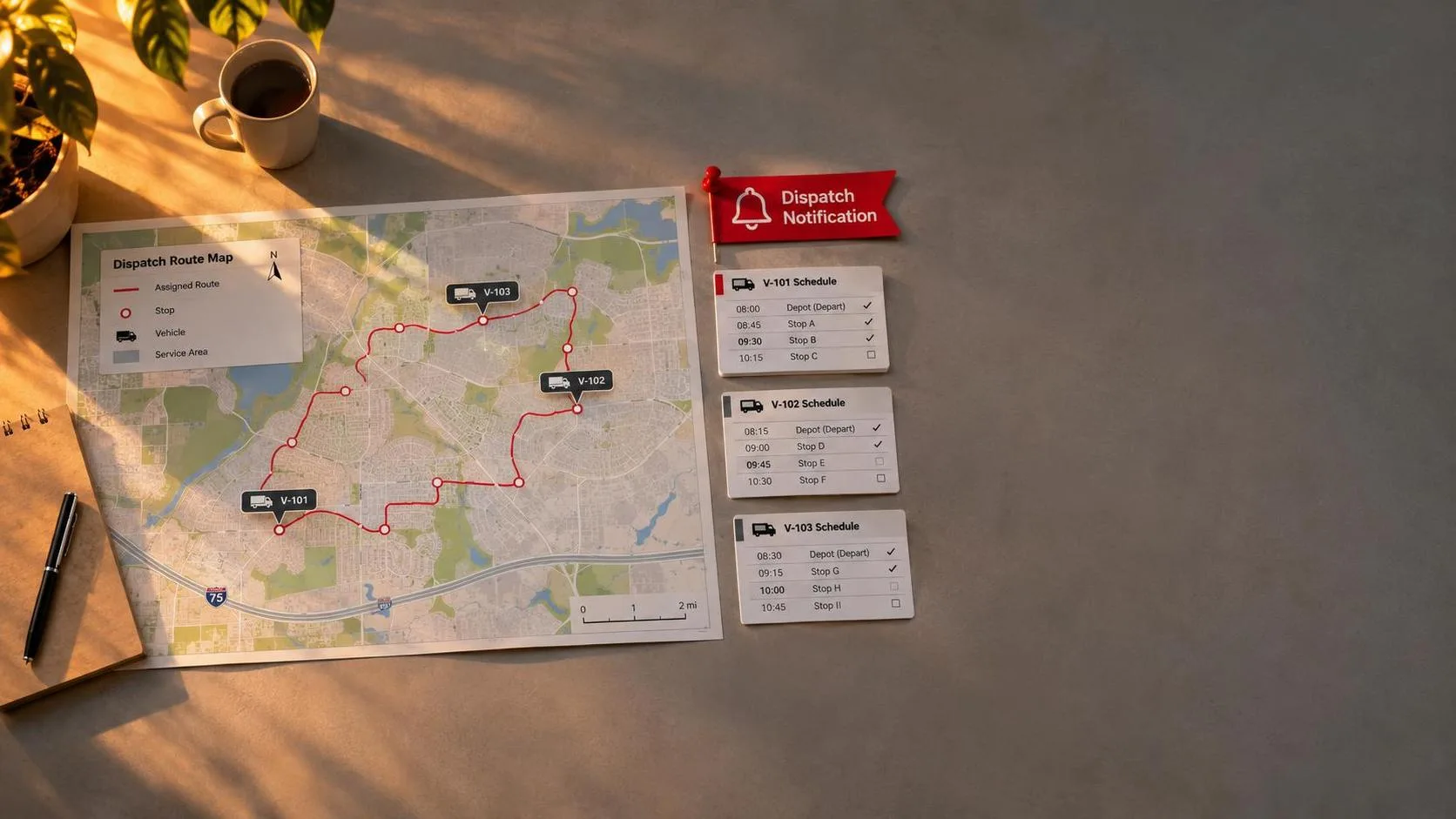
Dispatch software is not just a digital whiteboard for moving trucks around. In a working fleet, it affects cost per mile, empty miles, driver utilization, customer updates, and the quality of records available during a compliance review. The right system reduces manual calls without taking operational judgment away from the dispatcher.
I have managed dispatch operations in Dallas heat, winter weather, construction delays, and peak-season volume. The best results did not come from buying the software with the longest feature list. They came from connecting dispatch decisions to vehicle location, maintenance status, driver hours, load requirements, and proof of delivery. That is the standard I use when evaluating a platform.
What dispatch software should actually control
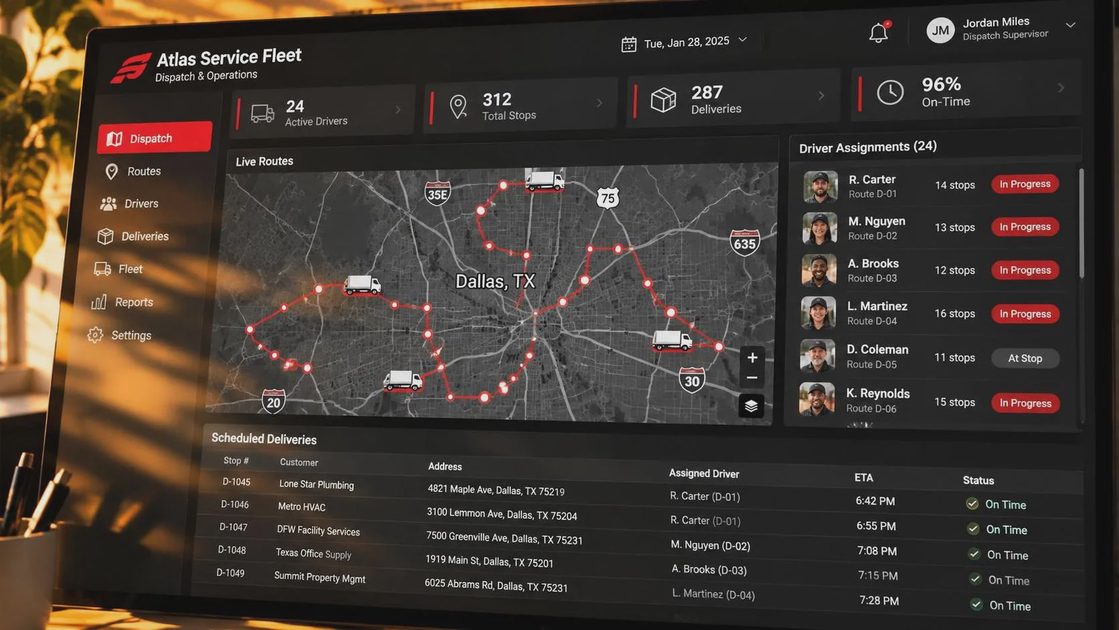
At minimum, dispatch software should give your team one live view of vehicles, drivers, stops, loads, and exceptions. A dispatcher should be able to assign work, send instructions, record arrival and departure times, and see whether a route is slipping before a customer calls.
Look for route planning that accounts for vehicle capacity, appointment windows, service areas, and real-world travel time. A route that looks efficient on a map can fail when a straight truck cannot access a loading dock or a tractor-trailer is sent through a restricted road. Systems that connect with GPS or telematics can also compare planned miles with actual miles, which is where fuel leakage and poor planning become visible.
Driver communication matters just as much. Dispatch software should support two-way messaging, status codes, electronic document exchange, and an audit trail. If a load is delayed because of a dock issue, the record should show when the driver reported it and when the customer was notified. That information protects billing accuracy and gives operations a defensible explanation for service failures.
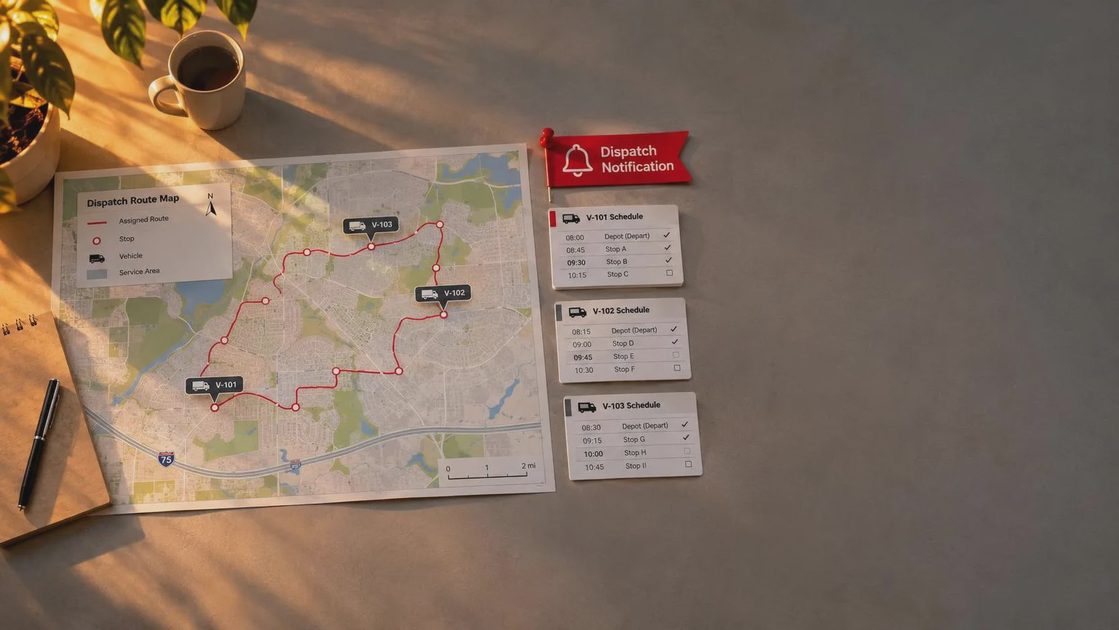
The ROI math your CFO will ask for
The business case starts with labor, miles, and downtime. Suppose three dispatchers each spend two hours per shift reconciling calls, text messages, and spreadsheet updates. At a loaded labor cost of $30 per hour, recovering even half of that time across 250 operating days represents roughly $22,500 annually. That is before counting reduced empty miles or faster invoicing.
A second calculation is route efficiency. If a 100-vehicle fleet averages 90 miles per vehicle per day and a better planning process removes 3 percent of avoidable miles, the result is 270 fewer miles daily. At $0.70 per mile for fuel, tires, maintenance, and depreciation, that is about $49,000 in annual operating cost over 260 days. Your own cost-per-mile figure should replace this example, but the method is straightforward.
Fleet Impact: Build the proposal around measurable baseline numbers: dispatcher hours per load, empty-mile percentage, average dwell time, late-stop frequency, and invoice lag. A platform that costs $20 to $60 per vehicle monthly needs a clear payback story, especially for a mixed fleet with seasonal utilization.
Do not count every promised efficiency as savings. If dispatchers use recovered time to manage more loads, the value may appear as capacity rather than headcount reduction. That still matters, but it should be described honestly in the capital request.
Compliance and risk controls belong in the evaluation
Dispatch software does not replace an electronic logging device or a compliant driver-hours process. For property-carrying operations, hours-of-service requirements under 49 CFR Part 395 still govern driving and on-duty limits. Your platform should work with the ELD system rather than create a second, conflicting record.
A dispatcher needs visibility into available driving time, planned arrival windows, and route changes that could pressure a driver into an unsafe decision. The system should flag a schedule that cannot be completed within legal hours and preserve changes made after dispatch. It should also restrict access to sensitive driver information and maintain user permissions by role.
For regulated fleets, confirm how the product handles inspection reports, shipping documents, driver status, and retention. Ask vendors to demonstrate an audit from the original assignment through final delivery. If the demonstration only shows a clean successful trip, it tells you very little. Ask what happens when a vehicle breaks down, a driver refuses a load, a customer changes the appointment, or a shipment is short.
Compliance also includes maintenance coordination. A truck with an open safety defect should not be dispatched because the scheduler missed an email. Integrating maintenance status can prevent avoidable downtime and reduce the chance that an out-of-service vehicle reaches a customer location.
Choosing features for a mixed fleet
A 20-vehicle service fleet does not need the same configuration as a 5,000-unit carrier. Start with operating complexity, not vehicle count. List your vehicle types, dispatch shifts, delivery windows, driver classifications, integration needs, and customer reporting obligations.
For medium-duty trucks and sprinter vans, useful features often include mobile proof of delivery, barcode scanning, geofenced arrival alerts, photo capture, and customer text notifications. For tractors and trailers, you may need appointment management, trailer visibility, detention documentation, driver relay planning, and integration with a transportation management system.
An electric vehicle pilot adds another layer. Dispatchers need to know vehicle range, charging location, charging duration, payload impact, and the next available charging window. Sending an electric van onto a longer route without those constraints can turn a software success story into an expensive recovery call.
Check integration depth before signing. Ask whether the connection with your telematics provider is real-time, how often data refreshes, and what happens during an outage. Confirm whether accounting, payroll, maintenance, fuel-card, and customer systems can exchange data without duplicate entry. A low monthly price loses its appeal when two employees spend hours exporting and cleaning files.
A practical rollout plan that protects uptime
Start with one terminal, one shift, or one route family. Clean your driver, vehicle, customer, and location records before importing them. Duplicate addresses and outdated phone numbers create bad dispatch decisions faster than a missing feature does.
Next, document the current process. Measure how a load is assigned, how changes are approved, how proof of delivery reaches billing, and how exceptions are escalated. Configure the system around that workflow, then remove unnecessary steps after the first test period.
Train dispatchers and drivers separately. Dispatchers need scenario practice for breakdowns, late appointments, load swaps, and hours-of-service conflicts. Drivers need short instructions on status updates, document capture, and what to do when the mobile connection fails. Keep a paper or offline fallback for critical operations.
Run a two-week pilot and compare planned versus actual miles, dwell time, late deliveries, communication volume, and unbilled completed work. Do not declare success because users logged in. Success means the numbers improve without creating unsafe pressure or excessive driver distraction.
Questions to ask before you buy
Ask how many clicks a dispatcher needs to change a route, whether drivers can use the mobile application with limited connectivity, and how quickly support responds during a night shift. Request references from fleets with similar vehicle types and service requirements rather than accepting a generic case study.
Ask for the full contract cost, including implementation, training, hardware, API access, premium support, data export, and termination terms. Confirm who owns operational data and how you retrieve it if you change providers. A system that traps your history can create a costly migration later.
Finally, define three success measures before deployment. For example, you might target a lower average dispatcher handling time, fewer avoidable empty miles, and faster proof-of-delivery submission. Review those measures weekly for the first 90 days, then monthly.
The best dispatch software pays back through controlled miles, fewer preventable delays, cleaner records, and more productive people. It should also make the operation easier to explain when a customer, CFO, or DOT inspector asks what happened. That is the real test: what it costs, what it pays back, and what it triggers with DOT.