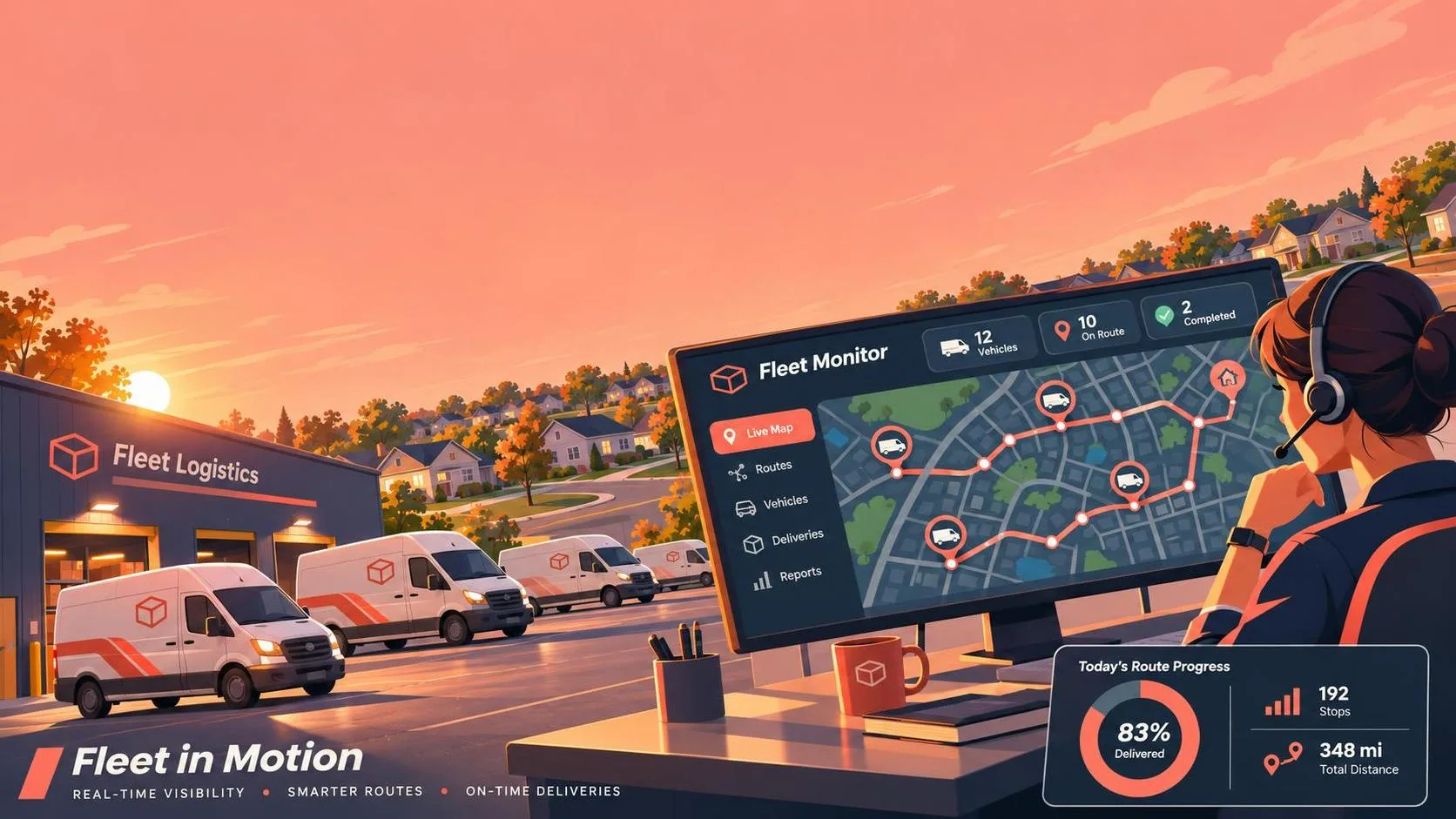
A single avoidable hour of truck downtime can cost more than a week of software fees once you add a missed delivery, replacement vehicle, overtime, and customer recovery. That is why fleet tracking deserves to be treated as an operating control, not a map on a dispatcher’s screen. In a 400-vehicle operation, the useful question is not whether fleet tracking is modern. It is whether the system reduces cost per mile, protects uptime, and produces records your safety team can defend.
I have seen managers buy telematics, install the hardware, and then use only the live location view. That leaves most of the financial value untouched. The return comes from connecting location, engine data, driver behavior, maintenance events, fuel use, and route performance to decisions people make every shift.
What fleet tracking should actually control
A practical platform should answer five questions without a spreadsheet built by hand. Where is each asset? Is it moving when it should be moving? How much time is it idling? Which vehicles need service before failure? Can dispatch prove what happened after a customer complaint or collision?
Location is the starting point, not the finish line. Geofences can record arrival and departure at a yard, customer, fuel island, or service facility. That creates a usable dwell-time record. Engine-connected data can show fault codes, harsh braking, speeding events, battery voltage, mileage, and engine hours. On medium-duty trucks and vans, those signals help maintenance teams schedule work around routes instead of waiting for a driver to report a problem.
Fleet tracking also improves dispatch discipline. If three trucks are assigned to a nearby area but one is routinely crossing town empty, the route plan is not doing its job. A weekly review can identify excess miles, late starts, unauthorized stops, and recurring congestion. The manager can then change the route, shift the delivery window, or coach the process with evidence rather than suspicion.
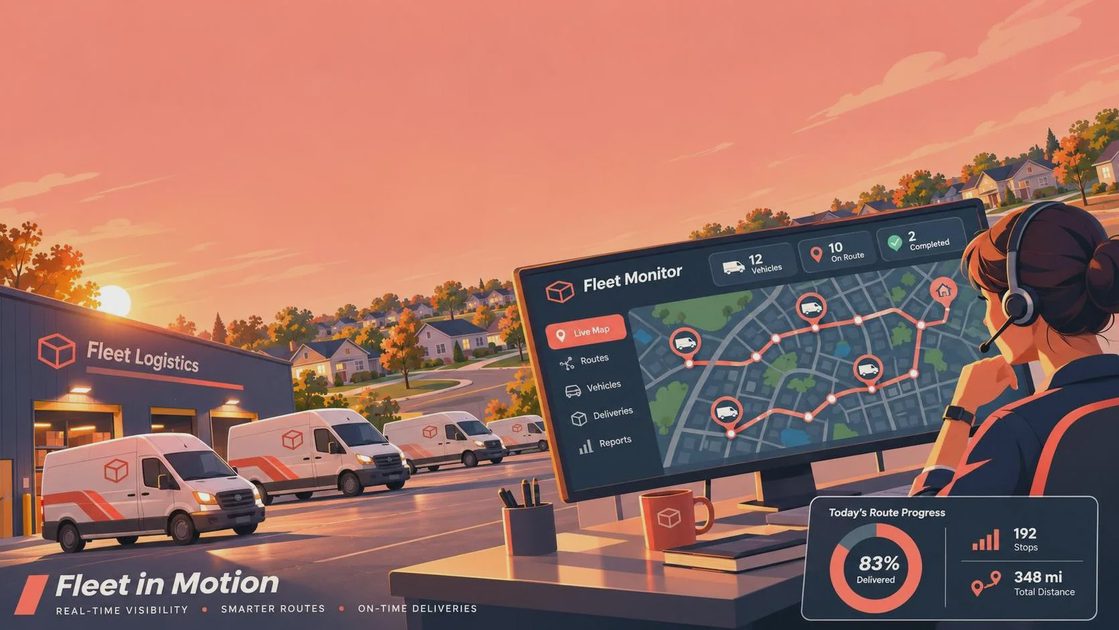
Fleet Impact: The first financial targets are usually idle fuel, unproductive miles, overtime, and avoidable downtime. Track those four lines before claiming savings. A credible business case shows the baseline, the intervention, and the result by vehicle class.
Build the ROI case with operating numbers
The CFO will ask what fleet tracking costs, when it pays back, and whether the savings are repeatable. Start with a 90-day baseline. Pull fuel gallons, total miles, idle hours, overtime, road calls, preventable incidents, and rental or substitute-vehicle expense. Separate Class 7 and Class 8 tractors from vans because their fuel and maintenance economics are not comparable.
For example, a 100-vehicle delivery fleet that spends $1.2 million a year on fuel should not claim that every improvement came from telematics. A modest reduction in unnecessary miles can matter, but the calculation needs actual gallons and route records. If a vehicle averages 8 miles per gallon and fuel costs $4 per gallon, every 8,000 avoidable miles represents about $4,000 in fuel before tire wear, maintenance, and driver time. That is a measurable opportunity, not a marketing estimate.
Installation, monthly subscriptions, camera hardware, cellular service, integration work, training, and replacement units belong in the cost column. Savings should include only changes the operation can verify. A payback period under 12 months is attractive, but a longer return can still work when the system supports compliance documentation, theft recovery, maintenance planning, and accident review.
Fleet tracking becomes more valuable when supervisors assign an owner to each metric. The maintenance manager owns fault-code response. Dispatch owns empty miles and dwell time. Safety owns behavior coaching and event review. Finance validates the monthly result. Without those owners, dashboards become expensive wallpaper.
Compliance, privacy, and DOT readiness
Fleet tracking does not replace required driver qualification files, hours-of-service records, inspection procedures, or electronic logging device requirements. Electronic logging devices remain governed by FMCSA rules in 49 CFR Part 395, including requirements related to records of duty status and supporting documents. Telematics data can support an investigation, but it should not be presented as a substitute for a compliant ELD program.
The stronger use is corroboration. A geofence arrival can help verify a delivery time. Engine movement can raise a question about a duty-status edit. A vehicle location history can help reconstruct an incident. Those records should be retained under a written policy that explains access, retention, correction requests, and disciplinary use. Drivers need to know what is collected and why.
Do not ignore cybersecurity. Change default passwords, limit administrator rights, use multifactor authentication where available, and review vendor access after employee turnover. A stolen login can expose vehicle locations, customer routes, and maintenance information. Ask vendors how data is encrypted, exported, deleted, and returned if the contract ends.
Fleet Impact: DOT readiness means having accurate, retrievable records and a documented process. A location breadcrumb alone will not satisfy an inspection. Use the platform to strengthen your existing compliance system, not to pretend the system is complete.
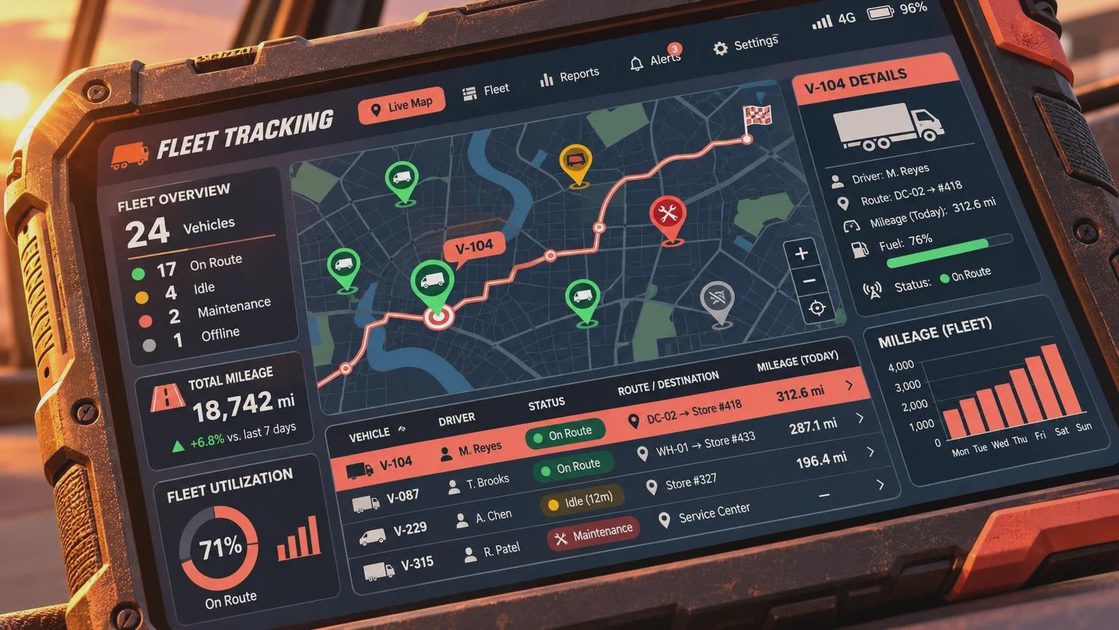
Choose the platform by workflow, not by dashboard color
Before requesting demonstrations, write down the daily decisions the system must improve. A regional carrier may prioritize tractor utilization, trailer visibility, and driver hours. A service fleet may need appointment sequencing, idle alerts, and proof of arrival. An electric pilot needs state-of-charge, charging location, dwell time, and energy consumption by route.
Ask every vendor to demonstrate the exact workflow using your scenarios. Show how a supervisor acknowledges a harsh-braking event, how maintenance receives a fault-code alert, how dispatch exports a missed geofence, and how finance obtains a monthly mileage report. Ask whether data can flow into your maintenance system, fuel-card platform, payroll process, or customer portal.
Compare hardware warranty terms, installation support, cellular coverage, offline behavior, API availability, contract length, and cancellation fees. A low monthly rate is not a bargain if the installation backlog keeps 30 vehicles invisible for six weeks. Likewise, a premium camera package may not pay back for a low-risk local fleet if managers lack time to review events.
Pilot with 15 to 25 vehicles representing different routes, drivers, vehicle ages, and duty cycles. Run the pilot long enough to include normal weeks, a maintenance cycle, and at least one unusual disruption. Measure response time, data accuracy, driver acceptance, and actual manager usage before expanding.
Make fleet tracking stick after installation
The rollout should begin with a written policy and a short driver briefing. Explain that the purpose is safer operation, better route support, accurate maintenance planning, and fair incident review. Demonstrate what the system records and what it does not record. Avoid promising that every alert will be used for discipline; that creates resistance and encourages people to work around the process.
Set alert thresholds carefully. A speeding alert that triggers constantly becomes background noise. Start with events that require action, such as repeated excessive speed, long idle periods at a known yard, low battery voltage, or a diagnostic code linked to a safety-critical system. Review alert volume after two weeks and remove reports nobody acts on.
Hold a weekly 30-minute review. Look at five measures: miles per stop, idle hours, on-time arrival, open maintenance alerts, and preventable incidents. Record the action, responsible person, due date, and expected financial effect. This simple routine turns fleet tracking from a passive feed into an operating meeting.
The manager’s buying checklist
Before signing, confirm the total three-year cost, installation schedule, hardware replacement process, data ownership, export rights, support hours, and integration charges. Confirm whether the quoted price includes cameras, accessories, cellular service, and taxes. Get uptime commitments and escalation contacts in writing.
Then define success in numbers. You might target a reduction in empty miles, fewer road calls per 100,000 miles, faster maintenance response, or fewer hours spent assembling compliance records. Do not set a vague goal such as “better visibility.” A useful target has a baseline, an owner, a deadline, and a dollar value.
My rule is straightforward: buy fleet tracking only when the operating process is ready to use it. The platform should help a dispatcher make a faster assignment, a technician prevent a roadside failure, and a safety manager coach from consistent evidence. What it costs, what it pays back, what it triggers with DOT—that is the complete decision. Start with the numbers, run a controlled pilot, and expand only when the data changes daily behavior.