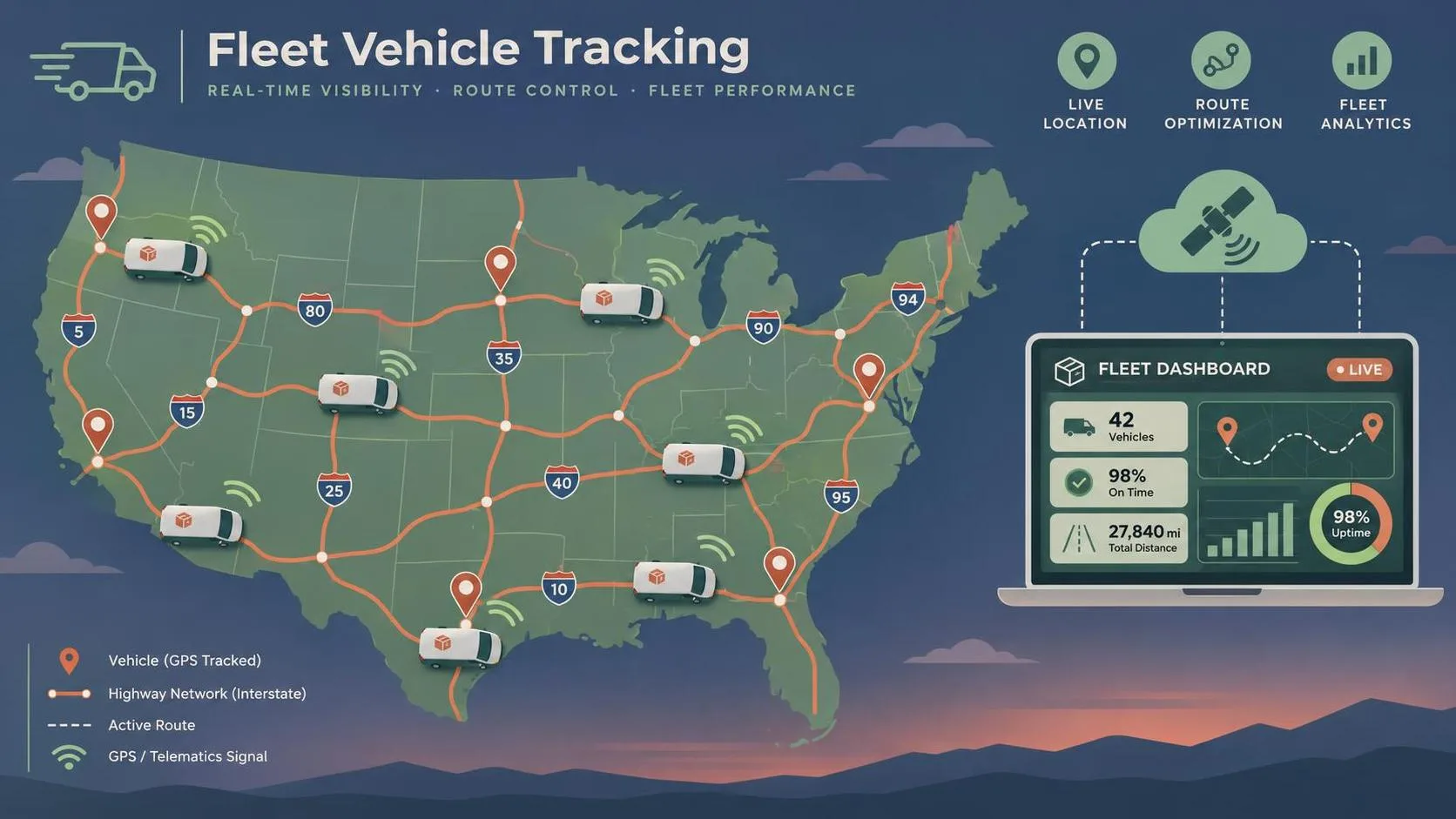
Fleet telematics pays its way when the savings from fewer wasted gallons, missed maintenance intervals, or unnecessary miles exceed the full cost of the system. Start with three numbers: annual cost per vehicle, annual savings you can reasonably attribute to the data, and the effect on cost per mile. A map full of moving trucks is not a business case.
What it costs, what it pays back, what it triggers with DOT: those are the questions I want answered before a contract reaches the purchasing desk. The answer depends on your vehicle mix, routes, existing systems, and whether anyone has time to act on the alerts.
What the system actually measures
Fleet telematics generally combines a device or vehicle connection, a communications network, and software that turns vehicle data into reports or alerts. Depending on the vehicle and configuration, a system may collect location, engine operating time, fault codes, mileage, speed, or driving events. Hardware and data access vary; confirm what is available for each vehicle before promising a particular report.
Location data can help dispatch find a nearby truck or investigate a missed stop. Engine hours can improve maintenance scheduling for a vehicle that idles or runs equipment while parked. Fault-code alerts can give a shop advance notice, but a code is a diagnostic starting point, not proof that a particular part has failed.
The useful distinction is between an alert and an action. If a warning arrives at 2 a.m., who receives it, what severity warrants a call, and who decides whether the vehicle continues? Without those answers, the platform has simply moved noise from the dashboard to a screen.
Build the cost-per-mile case
Fleet telematics pricing is only one line in the calculation. Include device purchases or financing, installation, subscriptions, integration work, training, data access, and the staff time needed to review exceptions. Ask about cellular connectivity, replacement hardware, contract minimums, renewal terms, and removal charges. Costs vary by agreement and vehicle.
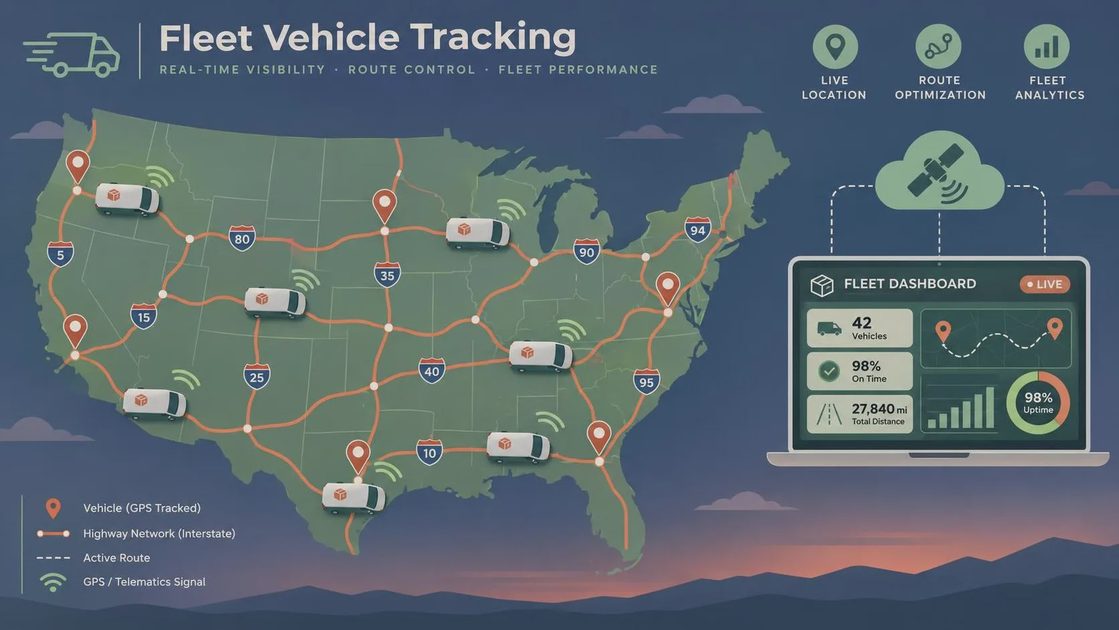
Fleet Impact: Here is an illustrative calculation, not a promised return. Suppose a 100-vehicle fleet spends $40 per vehicle per month on the service and associated hardware, or $48,000 annually. If installation and training add $10,000 in the first year, total first-year cost is $58,000. At 5 million annual fleet miles, that is 1.16 cents per mile before any savings.
If verified first-year savings total $75,000, net benefit is $17,000, or 0.34 cents per mile. The following year, assuming the recurring cost and savings stay the same, the annual net benefit would be $27,000. Upfront costs and savings timing matter, so do not describe either annual figure as an exact payback period.
To estimate payback, divide the $10,000 upfront expense by monthly net savings after the recurring subscription. At $75,000 in annual savings less $48,000 in annual recurring cost, that is about 4.4 months after savings begin. If benefits ramp up slowly, actual payback takes longer.
Choose a pilot you can measure
A fleet telematics pilot should target one operational problem, not every dashboard on the sales demo. For example, select comparable routes with excessive engine idle time, establish a baseline, and assign a dispatcher or supervisor to review exceptions weekly. Include enough vehicles and operating weeks to cover normal route variation, and document weather, workload, and seasonal changes.
Measure gallons or fuel spend where reliable data exists, not just idle minutes. Some idling is necessary for safety, temperature control, power take-off equipment, or the job itself. Set exclusions with drivers and maintenance before treating an event as preventable waste.
For a maintenance pilot, compare overdue services, vehicle availability, and repair lead time against your existing process. Avoid claiming that every avoided breakdown resulted from an alert. Review work orders to establish what action was taken and whether the failure was actually prevented. A control group of similar vehicles can help, though it will not eliminate every difference between routes.
Separate GPS tracking from ELD compliance
Fleet telematics does not automatically satisfy the electronic logging device mandate. If your operation is subject to the ELD rule, confirm that the specific device and configuration are on FMCSA's registered ELD list, and check the agency's revoked-device list as well. Registration is not an FMCSA endorsement or certification of a vendor's claims.
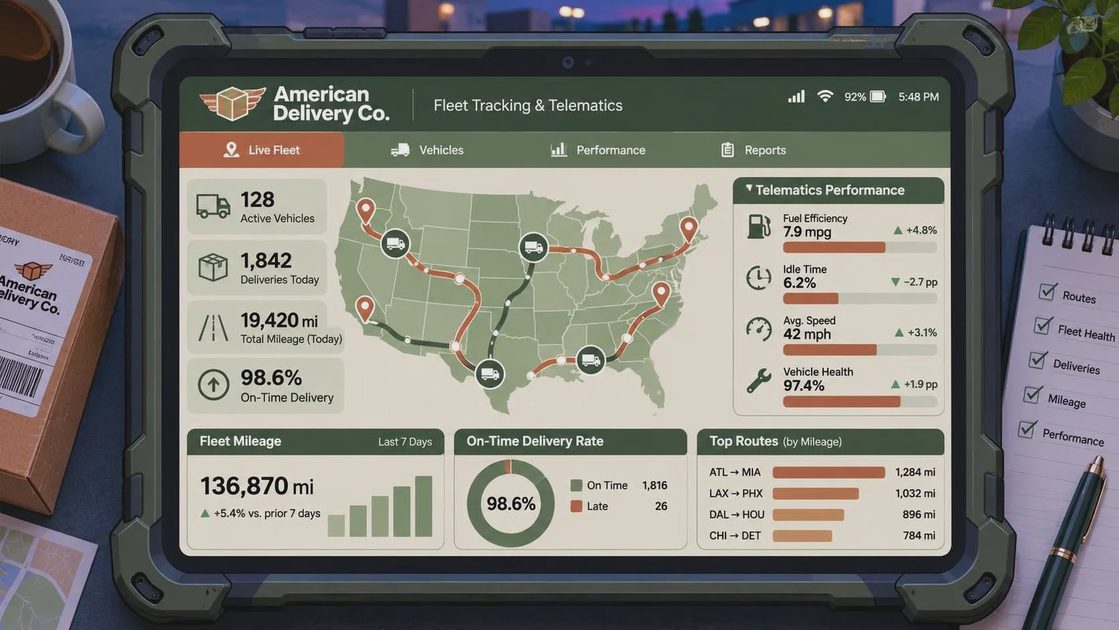
The ELD requirements are in 49 CFR Part 395, Subpart B. Applicability and exceptions depend on the operation; do not assume that every commercial vehicle or every driver needs an ELD. Hours-of-service rules and the duty to keep records can still apply when an ELD exception applies. Confirm your specific situation against the regulations.
Fleet Impact: A tracking subscription is not a substitute for an hours-of-service compliance program. Check whether drivers can produce required records during an inspection, whether records and supporting documents are retained as required, and how your team handles malfunctions and edits. Under 49 CFR 395.34, drivers and motor carriers have specific malfunction responsibilities, including reconstructing records when required and using paper records until the device is serviced and back in compliance, subject to the rule's conditions and deadlines.
Set data rules before installation
Fleet telematics can generate legitimate driver concerns, especially if vehicles are taken home or cameras are involved. Tell drivers what is collected, when collection occurs, who can view it, and how long the company keeps it. Address personal use, access to footage, and the process for disputing an event. Have counsel review applicable federal, state, and local privacy rules rather than assuming a single policy fits every jurisdiction.
Ask the provider how you can export raw records, who owns or controls the data under the contract, and what happens when service ends. Set role-based access for dispatch, safety, maintenance, and outside service providers. A maintenance technician may need fault codes without needing unrestricted access to driver video.
Finally, price the exit as carefully as the rollout. Confirm the notice period, renewal date, data-export format, and any early termination charges. The best platform is the one your operation can use to make a documented decision, improve a measurable cost or uptime figure, and leave without losing the records it needs.